You try to squat.
But something feels off.
Maybe your knees hurt.
Maybe you lean forward too much.
Maybe it just feels uncomfortable or unstable.
You’re not alone.
The squat is one of the most powerful exercises—but also one of the easiest to get wrong.
And when your squat feels wrong, it usually means your body is compensating somewhere.
The good news: most squat problems are fixable with simple adjustments.
By the end of this guide, you’ll understand why your squat feels wrong and how to fix it step by step.
The Basics (Beginner Explanation)
A squat is a movement where you bend your hips and knees to lower your body, then stand back up.
It trains your:
- Legs
- Hips
- Core
But more importantly, it teaches your body how to move efficiently.
Key terms explained simply:
- Range of motion: How deep you go in the squat.
- Alignment: Keeping your joints in safe positions.
- Mobility: Your ability to move joints freely.
In real life:
- Good squat → smooth, stable, controlled
- Bad squat → shaky, painful, or awkward
Quick Takeaway
- Squats train your whole lower body.
- Good form feels stable and controlled.
- Bad form feels awkward or painful.
- Most issues come from mobility or technique.
Why This Matters (Performance, Safety, Longevity)
Fixing your squat improves more than just one exercise.
- Builds real strength
Proper form allows your muscles to do the work effectively. - Prevents knee and back pain
Poor alignment puts stress on joints instead of muscles. - Improves athletic performance
Squats translate to jumping, running, and martial arts movements. - Increases confidence
A stable squat feels strong and controlled. - Supports long-term training
Good habits reduce injury risk over time.
Quick Takeaway
- Good squats build strength safely.
- Bad squats increase injury risk.
- Proper form improves overall performance.
- Fixing technique pays off long-term.
Exercises / Methods / Techniques
These exercises help you fix common squat problems step by step.
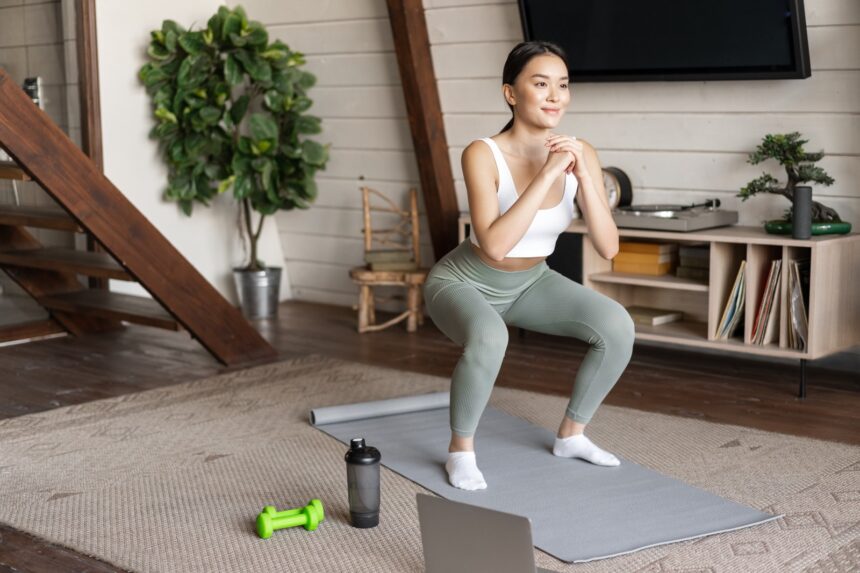
Bodyweight Squat
What it helps with:
Builds basic squat mechanics and control.
What you’ll feel working:
Thighs, hips, and glutes.
How to do it:
- Stand with feet shoulder-width apart.
- Keep your chest upright.
- Push your hips back slightly.
- Bend your knees and lower down.
- Keep your heels on the ground.
- Lower to a comfortable depth.
- Pause briefly.
- Push through your heels to stand up.
Breathing:
Inhale as you go down, exhale as you stand up.
Common mistakes (with fixes):
- Knees collapsing inward → Push knees outward slightly.
- Heels lifting → Keep weight on heels.
- Leaning forward → Keep chest upright.
- Going too fast → Slow down for control.
Make it easier (beginner option):
- Use a chair for support.
- Reduce depth.
Make it harder (progression):
- Add weight.
- Slow tempo.
Best for:
All levels; starting point for fixing squat form.
Goblet Squat
What it helps with:
Improves posture and balance during squats.
What you’ll feel working:
Legs, core, and upper body stability.
How to do it:
- Hold a weight close to your chest.
- Stand with feet shoulder-width apart.
- Keep your chest upright.
- Lower into a squat.
- Keep elbows inside knees.
- Maintain balance.
- Stand back up.
Breathing:
Inhale down, exhale up.
Common mistakes (with fixes):
- Dropping chest → Keep weight close to chest.
- Knees collapsing → Push outward.
- Losing balance → Slow down.
Make it easier (beginner option):
- Use lighter weight.
- Reduce depth.
Make it harder (progression):
- Increase weight.
- Pause at bottom.
Best for:
Beginners to intermediate; great for learning form.
Quick Takeaway
- Start with bodyweight control.
- Use goblet squats to improve posture.
- Focus on balance and alignment.
- Progress slowly.
Box Squat
What it helps with:
Teaches proper depth and control.
What you’ll feel working:
Glutes, thighs, and hips.
How to do it:
- Stand in front of a chair or box.
- Lower yourself slowly.
- Lightly touch the box.
- Keep your chest upright.
- Pause briefly.
- Stand back up.
Breathing:
Inhale down, exhale up.
Common mistakes (with fixes):
- Sitting too hard → Lower gently.
- Leaning forward → Keep chest upright.
- Losing tension → Stay engaged.
Make it easier (beginner option):
- Use a higher box.
- Move slowly.
Make it harder (progression):
- Lower box height.
- Add weight.
Best for:
Beginners; builds confidence and control.
Heel-Elevated Squat
What it helps with:
Improves squat depth if ankle mobility is limited.
What you’ll feel working:
Quads and balance.
How to do it:
- Place heels on a small platform.
- Stand upright.
- Lower into a squat.
- Keep your chest upright.
- Maintain balance.
- Stand back up.
Breathing:
Inhale down, exhale up.
Common mistakes (with fixes):
- Relying too much on elevation → Use as temporary tool.
- Losing balance → Move slowly.
- Knees collapsing → Push outward.
Make it easier (beginner option):
- Use small elevation.
- Reduce depth.
Make it harder (progression):
- Remove elevation gradually.
- Add weight.
Best for:
People with limited ankle mobility.
Quick Takeaway
- Box squats teach control and depth.
- Heel elevation helps mobility issues.
- Use tools as support, not crutches.
- Aim to return to natural movement.
Level Guide
Beginner
- Focus on basic mechanics
Learn movement before adding weight. - Avoid rushing depth
Only go as low as you can control. - Progress safely
Practice 2–3 times per week.
Intermediate
- Refine technique under load
Maintain form with added resistance. - Avoid ego lifting
Don’t sacrifice form for heavier weight. - Progress safely
Increase gradually.
Advanced
- Focus on consistency
Maintain form at higher intensity. - Avoid fatigue breakdown
Stop when form declines. - Progress safely
Follow structured programming.
Done-for-You Workouts
Home Workout
- Bodyweight squat: 3×10
- Box squat: 3×8
- Plank: 3×30 sec
This builds a strong foundation. Train 2–3 times per week.
Gym Workout
- Goblet squat: 3×10
- Barbell squat: 3×8
- Lunges: 3×10
This improves strength and technique under load.
Martial Arts-Focused Workout
- Squat variations
- Explosive drills
- Mobility work
This enhances performance and stability.
Safety & Injury Prevention
- Knee pain
Check alignment and reduce load. - Lower back discomfort
Maintain neutral spine. - Loss of balance
Slow down and reduce intensity.
How to modify safely
- Reduce weight.
- Limit range of motion.
- Use support tools.
When to rest or seek help
If pain persists, consult a professional.
Common Mistakes & Misconceptions
- “Deep squats are always better”
Depth should match your mobility. - “Knees should never go forward”
Slight forward movement is normal. - Ignoring mobility
Tight joints limit proper movement.
Mindset & Long-Term Progress
Squats take time to master.
Focus on quality over quantity.
Consistency leads to improvement.
Conclusion
If your squat feels wrong, it’s not a failure—it’s feedback.
Fixing your form will unlock better strength, safer training, and more confidence.
Next Steps
- Practice bodyweight squats regularly.
- Focus on control and alignment.
- Progress gradually with patience.
Train smart, and your squat will improve.
FAQ
1. Why do my knees hurt during squats?
Often due to poor alignment or weak muscles.
2. Should I stop squatting if it feels wrong?
Adjust and fix form, don’t ignore pain.
3. How long to fix squat form?
A few weeks with consistent practice.
4. Do I need weights?
No, bodyweight is enough to learn.
5. Why can’t I squat deep?
Usually mobility limitations.
6. Are squats bad for knees?
Not with proper form.
7. How often should I squat?
2–3 times per week for beginners.