
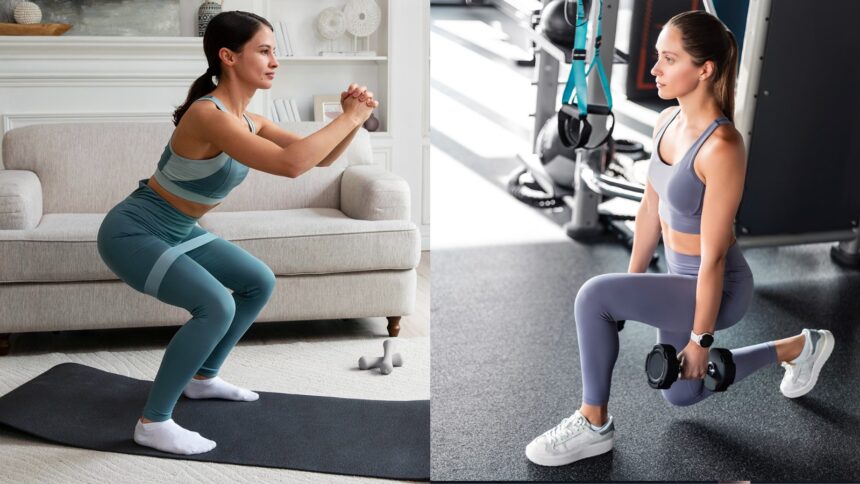
If you’re starting to take training seriously, this question will come up fast.
Should you train your whole body in one session? Or split your workouts into different muscle groups across the week?
Both approaches work. But they work differently.
Choosing the wrong one for your level or schedule can slow your progress—or make you quit altogether.
By the end of this guide, you’ll understand how each method works, when to use them, and how to pick the right one for your goals.
The Basics (Beginner Explanation)
Let’s keep it simple.
A full body workout trains your entire body in one session.
Example:
- Squats (legs)
- Push-ups (upper body)
- Rows (back)
A split workout divides your training into different days.
Example:
- Day 1: Upper body
- Day 2: Lower body
- Day 3: Rest
Here’s how it works in real life:
- Full body = train everything, multiple times per week
- Split = train specific muscles, with more focus
Key terms explained simply:
- Training frequency: How often you train a muscle each week.
- Volume: Total amount of work (sets and reps).
- Recovery: Time your body needs to repair and grow stronger.
Quick Takeaway
- Full body trains all muscles each session.
- Split workouts focus on specific muscles per day.
- Both can build strength and muscle.
- The best choice depends on your level and schedule.
Why This Matters (Performance, Safety, Longevity)
Your workout structure affects your results more than you think.
- Impacts consistency
A routine that fits your schedule is easier to maintain long-term. - Affects recovery
Too much volume without rest can slow progress. - Changes training quality
Better structure allows you to train with focus and energy. - Reduces injury risk
Balanced training prevents overuse of certain muscles. - Improves long-term progress
The right plan helps you progress steadily over time.
Quick Takeaway
- Structure affects consistency and results.
- Recovery is just as important as training.
- Balanced routines reduce injury risk.
- Long-term progress depends on sustainability.
Full Body Workouts (How They Work)
Bodyweight Squats
What it helps with:
Builds lower body strength and supports overall movement.
What you’ll feel working:
Thighs, hips, and glutes.
How to do it:
- Stand with feet shoulder-width apart.
- Keep your chest upright.
- Push hips back.
- Bend knees and lower body.
- Keep heels on the ground.
- Lower to a comfortable depth.
- Push back up to stand.
Breathing:
Inhale down, exhale up.
Common mistakes (with fixes):
- Knees collapsing inward → Push them outward slightly.
- Heels lifting → Focus on pressing through heels.
- Leaning forward → Keep chest upright.
Make it easier (beginner option):
- Use a chair.
- Reduce depth.
Make it harder (progression):
- Add weight.
- Slow tempo.
Best for:
All levels; foundational movement.
Push-Ups
What it helps with:
Builds upper body pushing strength.
What you’ll feel working:
Chest, shoulders, and arms.
How to do it:
- Place hands slightly wider than shoulders.
- Keep your body straight.
- Lower your chest toward the ground.
- Keep elbows slightly tucked.
- Lower fully.
- Push back up.
Breathing:
Inhale down, exhale up.
Common mistakes (with fixes):
- Hips sagging → Tighten your core.
- Elbows flaring → Keep them closer.
- Shallow reps → Lower fully.
Make it easier (beginner option):
- Knee push-ups.
- Incline push-ups.
Make it harder (progression):
- Decline push-ups.
- Add pauses.
Best for:
All levels; scalable exercise.
Quick Takeaway
- Full body workouts train all major muscles.
- Great for beginners and busy schedules.
- Focus on basic compound movements.
- Train 2–4 times per week.
Split Workouts (How They Work)
Dumbbell Rows
What it helps with:
Builds upper back strength and posture.
What you’ll feel working:
Back muscles and arms.
How to do it:
- Hold a dumbbell in one hand.
- Place the other hand on a bench.
- Keep your back flat.
- Pull the weight toward your torso.
- Keep elbow close to your body.
- Lower slowly.
- Repeat on both sides.
Breathing:
Exhale when pulling, inhale when lowering.
Common mistakes (with fixes):
- Rounding back → Keep back flat.
- Using momentum → Move slowly.
- Pulling too high → Stop at torso level.
Make it easier (beginner option):
- Use lighter weight.
- Reduce reps.
Make it harder (progression):
- Increase weight.
- Slow tempo.
Best for:
All levels; useful in upper body days.
Lunges
What it helps with:
Builds lower body strength and balance.
What you’ll feel working:
Thighs, glutes, and hips.
How to do it:
- Stand upright.
- Step forward with one leg.
- Lower your body until both knees bend.
- Keep your front knee aligned.
- Push back to starting position.
- Alternate legs.
Breathing:
Inhale down, exhale up.
Common mistakes (with fixes):
- Knee going too far forward → Keep knee aligned over foot.
- Losing balance → Step slower and controlled.
- Leaning forward → Keep torso upright.
Make it easier (beginner option):
- Hold onto support.
- Reduce depth.
Make it harder (progression):
- Add weights.
- Increase reps.
Best for:
Lower body days in split routines.
Quick Takeaway
- Split workouts focus on specific muscles.
- Allow more volume per muscle group.
- Better for advanced training.
- Require more training days.
Level Guide
Beginner
- Focus on full body workouts
Training all muscles frequently builds a strong foundation. - Avoid complex splits
Too many days can reduce consistency. - Progress safely
Train 2–3 times per week.
Intermediate
- Start experimenting with splits
Upper/lower splits work well. - Avoid overtraining
Balance volume and recovery. - Progress safely
Increase training frequency gradually.
Advanced
- Use split routines for specialization
Focus on specific muscle groups. - Avoid neglecting recovery
High volume requires proper rest. - Progress safely
Follow structured programs.
Done-for-You Workouts (Examples)
Full Body Workout (3x per week)
- Squats: 3×10
- Push-ups: 3×10
- Rows: 3×10
- Plank: 3×30 sec
- Rest: 60 sec
Why it works:
Trains all muscles frequently, ideal for beginners and busy schedules.
Split Workout (Upper/Lower – 4x per week)
Day 1 (Upper):
- Push-ups: 3×10
- Rows: 3×10
Day 2 (Lower):
- Squats: 3×10
- Lunges: 3×10
Repeat cycle
Why it works:
Allows more focus per muscle group with better recovery.
Martial Arts-Focused Routine
- Full body strength (2x/week)
- Skill training (2–3x/week)
Why it works:
Balances strength and performance without overload.
Safety & Injury Prevention
- Persistent fatigue
Reduce training frequency. - Joint pain
Modify exercises or volume. - Poor recovery
Add rest days.
Common Mistakes & Misconceptions
- “Split workouts are always better”
This happens due to advanced routines online; beginners benefit more from full body training. - “Full body is only for beginners”
Full body can be effective at all levels when programmed correctly. - Training too often with splits
Leads to fatigue; balance volume and rest.
Mindset & Long-Term Progress
The best workout is the one you can stick to.
Start simple. Build consistency. Then adjust.
You don’t need complexity to see results.
Conclusion
Full body and split workouts both work—but for different situations.
Beginners benefit more from full body routines, while split workouts suit those with more experience and time.
Next Steps
- Start with full body workouts if you’re new.
- Transition to split routines as you gain experience.
- Choose a plan you can follow consistently.
Train smart, stay consistent, and your structure will support your progress.
FAQ
1. Is full body or split better for beginners?
Full body is usually better for beginners.
2. Can I build muscle with full body workouts?
Yes, especially with proper progression.
3. How many days should I train with a split?
Usually 4–6 days per week.
4. Can I switch between both?
Yes, depending on your goals and schedule.
5. Which is better for fat loss?
Both work; consistency matters more.
6. Do splits give faster results?
Not necessarily; they depend on experience and recovery.
7. What if I miss a workout?
Full body routines are more flexible in this case.