
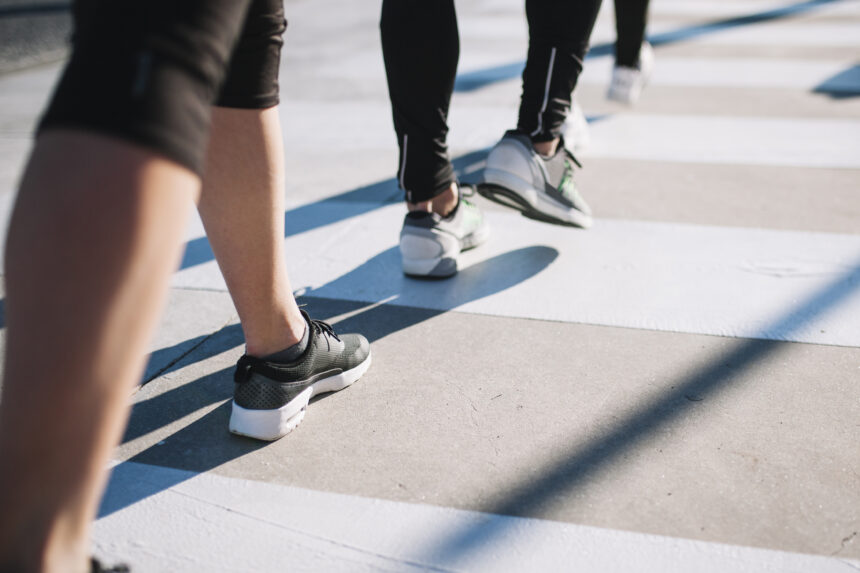
Does walking help you lose weight? Yes, walking can support weight loss, especially when it helps you move more consistently, manage your energy balance, and build a routine you can actually keep.
But walking is not magic. It works best when it is consistent, gradually progressed, and paired with realistic eating habits, recovery, and basic strength training.
For beginners, that is good news.
You do not need to destroy yourself with intense workouts to start improving your fitness. A simple walking plan can be one of the safest ways to begin.
The Direct Answer: Does Walking Help You Lose Weight?
Walking may help you lose weight because it increases daily calorie use without being too hard on your joints or recovery.
It is especially useful for beginners because it is:
- Low impact
- Easy to repeat often
- Simple to adjust
- Beginner-friendly
- Useful for general conditioning
- Less intimidating than many gym workouts
The CDC notes that physical activity can support weight management, but the amount needed varies from person to person. For weight loss and keeping it off, many people need a higher amount of physical activity unless they also adjust food and drink intake.
That means walking can help, but it is only one part of the bigger picture.
A better way to think about it:
Walking is not a shortcut. It is a reliable base.
Why Walking Works for Beginners
Walking helps because it is easy to recover from.
Many beginners try to start with workouts that are too intense. They run hard, do random high-intensity circuits, feel terrible for three days, then stop.
Walking avoids that trap.
A good walking plan lets you build momentum without making every workout feel like a punishment. That matters because weight loss usually depends more on what you can repeat for months than what you can survive once.
Regular brisk walking can also support heart health, endurance, energy, and weight management, according to Mayo Clinic.
For a beginner, those benefits are practical. Better endurance means stairs feel easier, martial arts classes feel less exhausting, and strength workouts become easier to recover from.
Walking and Weight Loss: What Actually Matters
Walking for weight loss depends on a few simple factors.
1. Total Walking Time
A 10-minute walk is useful, especially if you are currently inactive.
But for noticeable weight-loss support, most beginners need to build toward more total weekly walking.
The CDC recommends adults aim for at least 150 minutes of moderate-intensity physical activity per week, plus at least 2 days of muscle-strengthening activity.
That does not mean you must start there on day one.
It means 150 minutes per week is a good long-term target.
2. Walking Intensity
A casual stroll is better than sitting, but brisk walking usually gives a stronger fitness effect.
A simple beginner test:
If you can talk in short sentences but would not want to sing, you are probably walking at a moderate pace.
If you are gasping, slowing down is fine.
3. Food Intake
Walking burns energy, but weight loss still depends on overall energy balance.
If walking makes you hungrier and you eat far more than usual, weight loss may stall.
This does not mean you need an extreme diet. It means walking works better when paired with simple nutrition awareness, such as eating enough protein, drinking water, and not treating every walk like a reason to over-reward yourself with extra snacks.
4. Consistency
One long walk on Sunday is nice.
Four or five shorter walks across the week may work better for building a habit.
For beginners, consistency beats intensity most of the time.
Quick Self-Check: Will Walking Be Enough for You?
Use this simple scan.
Walking may be enough to start if:
- You are currently inactive
- You get tired easily during daily activity
- You want a low-impact way to begin
- You are returning after a break
- You want to lose weight slowly and safely
- You can walk without pain or unusual symptoms
Walking alone may not be enough if:
- You already walk a lot every day but weight is not changing
- You are not tracking food intake at all
- You want faster body composition changes
- You have very low muscle mass
- You need better strength for martial arts, lifting, or daily tasks
In that case, walking can still be part of the plan, but you may also need strength training and nutrition changes.
What I Would Do First
If you are a beginner, do not start by chasing 10,000 steps or copying someone else’s routine.
Start with a simple baseline.
Week 1: Find Your Starting Point
Walk for 10–20 minutes, 3–5 days this week.
Keep the pace comfortable. You should finish feeling like you could do a little more.
After each walk, note:
- How long you walked
- How hard it felt from 1–10
- Whether you had pain
- Whether your breathing felt controlled
- How your energy felt after
This gives you information before you add more.
Week 2: Add a Little More
If Week 1 felt fine, add 5 minutes to two of your walks.
Do not increase everything at once.
If you walked 15 minutes, try 20 minutes.
If you walked 20 minutes, try 25 minutes.
Small jumps are easier to recover from.
Week 3–4: Build Toward a Routine
Aim for 20–30 minutes per walk, 4–5 days per week.
At this stage, you can keep most walks easy and make one or two walks slightly brisker.
That is enough for many beginners to feel better conditioned within a month.
A Simple Walking Workout for Beginners
Here is a beginner walking workout you can use immediately.
Easy Walking Session
- Walk slowly for 3–5 minutes.
- Increase to a comfortable pace for 10–20 minutes.
- Slow down for the final 3–5 minutes.
- Stop if you feel pain, dizziness, chest discomfort, or unusual shortness of breath.
This is the best starting point if you are out of shape, returning after a break, or unsure how much you can handle.
Brisk Walking Session
- Warm up with 5 minutes of easy walking.
- Walk briskly for 1 minute.
- Walk easy for 2 minutes.
- Repeat 4–6 times.
- Cool down for 5 minutes.
This gives you a little more intensity without turning the walk into a hard workout.
Longer Easy Walk
- Choose a relaxed pace.
- Walk for 30–45 minutes.
- Keep breathing controlled.
- Finish feeling steady, not drained.
Use this once per week if your feet, knees, hips, and back tolerate walking well.
How Much Walking to Lose Weight?
There is no perfect number for everyone.
Some beginners may see progress from 20–30 minutes of walking most days, especially if they were inactive before. Others may need more total activity and better nutrition consistency.
A practical target:
- Start with 10–20 minutes, 3–5 days per week
- Build toward 150 minutes per week
- Add more only if recovery, joints, and schedule allow
- Include strength training 2 days per week when possible
The CDC’s adult activity guideline of 150 minutes per week is a useful baseline for health, while weight loss may require more activity depending on the person and their food intake.
For beginners, the goal is not to rush to the maximum.
The goal is to build a walking routine your body can repeat.
Does Walking Burn Fat?
Walking can help your body use energy, and that may support fat loss when your overall routine creates a calorie deficit.
But be careful with the phrase “burn fat.”
Your body uses a mix of fuel sources during activity. The real-world result depends on your total activity, nutrition, recovery, and consistency over time.
So instead of asking, “Does this walk burn fat right now?” ask:
“Can I repeat this habit often enough to support fat loss over the next few months?”
That question is more useful.
Beginner Example 1: The Home Trainee
A beginner trains at home 2 days per week with bodyweight squats, push-ups on a countertop, and light core work.
They want to lose weight, so they add a hard 45-minute workout every day. After one week, their knees hurt and they quit.
What they were likely doing wrong:
- Too much intensity too soon
- No walking baseline
- No recovery days
- Treating soreness as proof of progress
A better change:
They keep strength training 2 days per week and add 15-minute walks after dinner, 4 days per week.
After 2–4 weeks, progress may look like:
- More consistent movement
- Less soreness
- Better energy
- Longer walks without feeling wiped out
- Small weight change or better waist measurement if nutrition is also consistent
That is a better beginner win than one brutal week.
Beginner Example 2: The Martial Arts Student
A beginner kickboxer trains twice a week. They gas out during warm-ups and feel heavy during footwork drills.
They assume they need intense sprints, so they start running hard on off days. Their shins hurt, and their kickboxing still feels rough.
What they were likely doing wrong:
- Adding high impact work before building an aerobic base
- Not recovering between martial arts sessions
- Confusing “hard” with “effective”
A better change:
They walk 25 minutes at an easy-to-moderate pace on three non-kickboxing days.
After 2–4 weeks, progress may look like:
- Better breathing during class warm-ups
- Less panic during longer drills
- Improved recovery between rounds
- More energy for technique practice
Walking will not replace skill training, but it can support the engine behind skill training.
How Walking Helps Martial Arts Beginners
Martial arts beginners often think conditioning has to look intense.
Sometimes it does.
But beginners usually need a base first.
Walking can help build that base because it improves general endurance without adding too much stress. For boxing, kickboxing, BJJ, MMA, karate, taekwondo, or general self-defense training, that matters.
If every conditioning session is hard, you may show up to class tired. If your easy conditioning is controlled, you can build fitness while still having energy for technique.
A simple rule:
Your walking should support martial arts practice, not steal from it.
If walking makes your legs feel better and your breathing more controlled, keep it.
If it makes your knees, feet, or hips hurt before class, reduce it.
How to Progress Safely
Progress walking by changing one thing at a time.
Do not increase distance, speed, hills, and frequency all in the same week.
Beginner Progression Options
Choose one:
- Add 5 minutes to one or two walks
- Add one extra walking day
- Add short brisk intervals
- Add a gentle hill
- Walk the same route slightly faster
- Add a longer easy walk once per week
A safe progression feels almost boring.
That is not a problem. Boring is often what keeps beginners consistent.
Common Mistakes and Simple Fixes
Mistake 1: Starting Too Fast
If you are breathing hard within the first few minutes, slow down.
Simple fix: Start with 5 easy minutes before increasing pace.
Mistake 2: Chasing Step Counts Too Soon
A high step goal can be useful later, but it can overwhelm beginners.
Simple fix: Track walking minutes first. Build the habit before chasing numbers.
Mistake 3: Ignoring Foot or Knee Pain
Walking is low impact, but it is not zero impact.
Simple fix: Reduce distance, check shoes, choose flatter routes, and rest if pain continues.
Mistake 4: Only Walking and Never Building Strength
Walking is useful, but strength training helps support muscle, joints, posture, and long-term function.
Simple fix: Add two short strength sessions per week using squats, hip hinges, wall push-ups, rows, and basic core work.
Mistake 5: Eating Back Every Walk
Walking can increase appetite.
Simple fix: Keep meals simple and balanced. Do not turn every walk into a food reward.
When to Stop or Modify
Stop walking and ask a qualified professional if you have chest pain, faintness, severe shortness of breath, sudden dizziness, or unusual symptoms.
Modify your walking if you notice:
- Sharp pain
- Pain that changes your walking pattern
- Foot, knee, hip, or back pain that worsens
- Swelling
- Numbness or tingling
- Excessive fatigue that does not improve with rest
Do not push through pain to “burn more calories.”
That is not discipline. That is a bad trade.
How to Make Walking Easier
Try this:
- Walk slower
- Walk for less time
- Choose flat ground
- Break one walk into two shorter walks
- Take a rest day
- Avoid hills temporarily
- Use supportive shoes
- Walk indoors if weather or terrain is a problem
Who Should Be Cautious
Walking is generally accessible, but some people should be more careful.
Be cautious if you:
- Have a heart, lung, or metabolic condition
- Have uncontrolled blood pressure
- Are recovering from injury or surgery
- Have foot, knee, hip, or back pain
- Feel dizzy or unusually breathless during light activity
- Are pregnant or recently postpartum and unsure what is appropriate
- Have been inactive for a long time
If you are unsure, ask a qualified professional before starting or changing your training.
What to Track Besides Weight
Scale weight can fluctuate from water, food, stress, sleep, and training.
Track a few other signs too:
- Walking time
- Weekly walking frequency
- Average energy level
- Waist measurement
- Resting soreness
- Breathing control
- How clothes fit
- Martial arts class stamina
- Recovery after training
For many beginners, the first win is not dramatic weight loss.
It is becoming the kind of person who moves consistently.
That is not small.
Coach’s Note
Walking is often underrated because it does not feel intense.
But for beginners, that is exactly why it works.
A beginner does not need every session to feel like a test. They need enough training to improve, but not so much that they quit, get hurt, or dread the next session.
For martial artists, walking can be useful on non-training days because it builds general conditioning while keeping your body fresh enough to learn skills.
If your goal is weight loss, use walking as the base. Then add strength training and better nutrition habits instead of trying to turn every walk into a punishment.
Black Belt Guy Training Perspective
This article is written for beginners who want practical, safe, no-confusion training guidance.
The focus is realistic progress: starting with what you can repeat, tracking simple signals, and making decisions based on recovery, pain, and consistency.
This article is general education. It does not replace coaching, medical care, or individualized advice.
Editorial note: This article is for general fitness education. It is not medical advice. If you have pain, injury, breathing symptoms, or a medical condition, ask a qualified professional before starting or changing your training.
FAQ
Does walking help you lose belly fat?
Walking may support overall fat loss, but you cannot choose exactly where fat comes off first.
If walking helps you stay active and manage your energy balance, it can support body fat reduction over time. For belly fat specifically, combine walking with nutrition consistency, strength training, sleep, and patience.
How long should I walk to lose weight?
Start with 10–20 minutes, 3–5 days per week if you are a beginner.
Over time, build toward 150 minutes per week or more if your body tolerates it well. Some people need more activity for weight loss, especially if food intake does not change.
Is walking better than running for weight loss?
Walking is not automatically better than running, but it may be better for beginners who need a lower-impact starting point.
Running burns more energy per minute for many people, but it is also harder to recover from. Walking is often easier to repeat consistently.
Should I walk every day?
You can walk every day if the walks are easy and your body feels good.
If you are new, start with 3–5 days per week. Add more days only if your feet, knees, hips, and back feel okay.
Is 10,000 steps necessary for weight loss?
No. You do not need 10,000 steps to start losing weight.
It can be a useful goal for some people, but beginners should start with a realistic baseline. If you currently average 3,000 steps, moving toward 5,000 or 6,000 may already be meaningful.
Can walking replace strength training?
Walking is helpful, but it should not fully replace strength training.
Strength training supports muscle, joints, posture, and long-term function. The CDC recommends adults do muscle-strengthening activity at least 2 days per week.
Is it better to walk before or after meals?
Either can work.
Some beginners like walking after meals because it feels easy to schedule and may help them avoid long periods of sitting. Keep the pace comfortable, especially after a large meal.
What if walking makes me hungrier?
That can happen.
Try eating balanced meals with protein, fiber-rich carbohydrates, healthy fats, and enough fluids. If your hunger becomes intense, your walking volume may be too high for your current recovery or nutrition habits.
Sources and Further Reading
- [CDC: Physical Activity and Your Weight and Health] — Useful for understanding how physical activity supports weight management and why the amount needed varies by person.
- [CDC: Adult Activity Guidelines] — Provides the general adult recommendation of 150 minutes of moderate-intensity activity per week plus 2 days of strengthening work.
- [Mayo Clinic: Walking — Trim Your Waistline, Improve Your Health] — Explains how regular brisk walking can support health, endurance, and weight management.
- [ACSM Physical Activity Guidelines] — A professional exercise science resource for physical activity recommendations and health-related exercise guidance.
Conclusion
So, does walking help you lose weight?
Yes, it can.
Walking is one of the simplest ways for beginners to increase activity, build consistency, and support weight loss without jumping into overly intense workouts.
Start small. Walk at a pace you can recover from. Track more than the scale. Add strength training when possible. Progress slowly.
The best walking plan is not the hardest one.
It is the one you can keep doing.