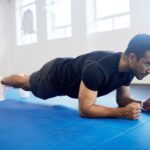
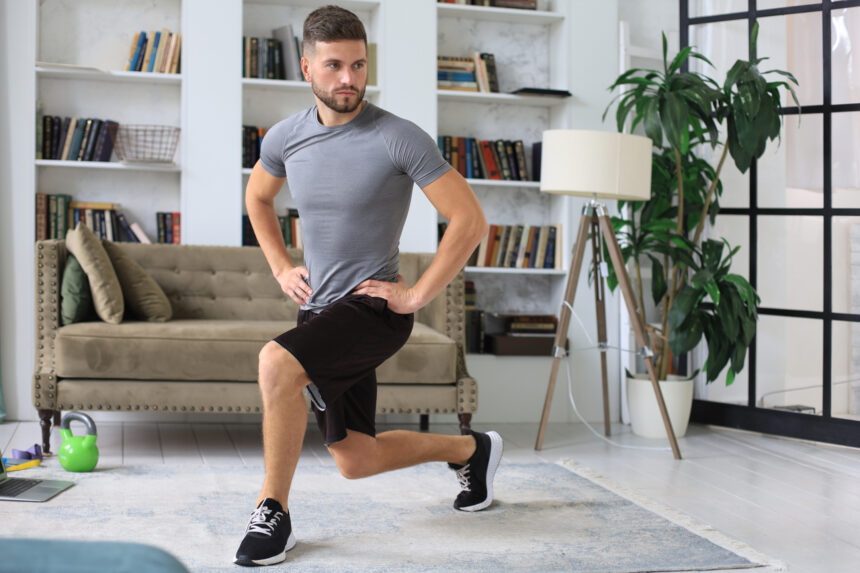
Small space workout routines are best when they are simple, quiet, and easy to repeat.
You do not need a garage, gym membership, treadmill, squat rack, or large open room to start training. If you live in an apartment, share a room, or only have a few feet of floor space, you can still build strength, improve conditioning, and move better.
The key is choosing low-noise, no-jump exercises that fit your space and your current fitness level.
In a small room, your workout should not be judged only by how much you sweat. It should be judged by whether you can move quietly, stay balanced, control your joints, and repeat the session without feeling beaten up the next day.
This guide gives you a beginner-friendly home workout you can do in a small room with no equipment.
The 4 Rules of Small Space Training
Small-space training works best when you stop trying to copy a gym workout and start training for the room you actually have.
Use these four rules.
1. Quiet Feet First
If your floor shakes, your feet slap, or your downstairs neighbor can hear every rep, the exercise is too loud for your space.
Make the movement smaller, slower, or more supported.
2. Control Before Speed
Speed makes mistakes harder to notice.
If your knees cave in, your shoulders shrug, your balance disappears, or your breathing gets rushed, slow down before adding more intensity.
3. Support Is Allowed
Using a wall, chair, or countertop is not cheating.
For beginners, support can make an exercise safer and easier to control. You can reduce support later as your balance, strength, and confidence improve.
4. Finish Repeatable
A good beginner workout should leave you feeling like you could train again in a day or two.
If you finish destroyed, sore for several days, or nervous to repeat the workout, it was probably too much for your current level.
Who This Workout Is Best For
This workout is a good fit if you:
- Are new to fitness
- Train at home
- Live in an apartment
- Need a low-noise workout
- Want a no-jump routine
- Have limited floor space
- Do not own gym equipment
- Are returning after a break
- Want a simple routine you can repeat
You can do this workout in a space about the size of a yoga mat.
Who Should Be Cautious
Be cautious if you have:
- Knee, hip, ankle, shoulder, neck, or lower back pain
- Balance problems
- Dizziness during exercise
- Chest pain or unusual shortness of breath
- A recent injury
- A medical condition that affects exercise
- A slippery floor or cluttered room
If any of these apply, use the easiest version first.
Ask a qualified professional before starting or changing your training if you have pain, injury, breathing symptoms, or a medical condition.
Do not push through sharp pain, joint pain, dizziness, chest symptoms, or unusual shortness of breath.
The Small-Room Readiness Test
Before you start the workout, run this quick test.
It takes about one minute.
Step 1: Space Check
Stand in your training spot.
Take one small step forward, backward, left, and right.
You pass if:
- You do not hit furniture
- You do not step on a rug edge
- You have room to move your arms
- You can turn slightly without bumping anything
If you fail this check, clear more space or use only standing-in-place exercises.
Step 2: Quiet Step Test
March in place for 20 seconds.
You pass if:
- Your feet stay quiet
- Your knees feel comfortable
- You can breathe normally
- The floor does not shake
If your feet are loud, slow down and lift your knees less.
Step 3: Balance Test
Stand on one leg for 10 seconds, then switch sides.
You pass if:
- You can stay upright
- You do not need to hop
- Your ankle and knee feel comfortable
- You can set your foot down softly
If this feels unstable, keep one hand near a wall or chair during the workout.
What Your Test Result Means
Use the test to choose the right workout level for today.
- Passed all three tests: You can use the full beginner workout.
- Failed the space check: Use standing-in-place exercises only.
- Failed the quiet step test: Use the Level 1 quiet version.
- Failed the balance test: Keep one hand near a wall or chair.
- Failed more than one test: Use the 5-minute or 10-minute version today.
This is not about passing or failing as a person.
It is about matching the workout to your room, body, and current energy level.
Apartment Noise Scale
Use this scale if you train above neighbors, share walls, or need to keep your workout quiet.
Level 1: Nearly Silent
Best for late evening, thin floors, shared housing, soreness, or returning after a break.
Use:
- Wall push-ups
- Standing marches
- Glute squeezes
- Seated core bracing
- Slow squats to a chair
- Standing shoulder mobility
Level 2: Soft Movement
Good for normal beginner apartment training.
Use:
- Marching in place
- Step-backs
- Chair squats
- Slow mountain climbers against a wall
- Standing knee lifts
- Controlled reverse steps
Level 3: Moderate Noise
Use only if your floor is solid, your form is controlled, and noise is not a problem.
Use:
- Faster marching
- More continuous circuits
- Bodyweight squats
- Low-impact skater steps
- Faster step-back drills
Avoid in Small Apartments
Avoid:
- Jump squats
- Burpees
- High knees
- Jumping jacks
- Running in place
- Hard pivots
- Heavy stomping
- Fast floor mountain climbers
Quiet training is not lazy training. Quiet training forces control.
Small Room Exercise Swaps
Use these swaps when a normal workout exercise is too loud, too cramped, or too hard on your joints.
- Instead of jumping jacks, do march and reach
- Instead of burpees, do wall mountain climbers
- Instead of jump squats, do chair squats
- Instead of running in place, do step-back touches
- Instead of floor push-ups, do wall push-ups
- Instead of planks, do standing core bracing
- Instead of jump lunges, do small reverse steps
- Instead of fast skaters, do side steps with a pause
The goal is not to make every exercise easier. The goal is to make the workout fit your space so you can train consistently.
Choose Your Workout Version Today
Use this simple guide before you start.
Choose the 5-Minute Version If:
- You feel overwhelmed
- You are brand new
- You are short on time
- You are sore from a previous workout
- You failed more than one readiness test
Choose the 10-Minute Version If:
- You are new but ready to move
- You want to build the habit first
- You train before work
- You want a quick low-noise routine
- You are returning after a break
Choose the Full 20-Minute Version If:
- You passed the readiness test
- You can move quietly
- Your joints feel okay
- You can finish without rushing
- You have enough time to warm up and cool down
Choose the Supported Version If:
- Your balance feels unstable
- You are nervous about falling
- Your knees or hips need a gentler start
- You want to use a chair or wall for confidence
The right version is the one you can do safely and repeat.
The 5-Minute Minimum Version
Use this on busy days or when you almost skip training.
Do each exercise for one minute.
- March in place
- Chair squats
- Wall push-ups
- Standing knee lifts
- Slow breathing and gentle stretching
This version is not meant to be extreme. It is meant to keep the habit alive.
For many beginners, five controlled minutes is better than waiting for the perfect 45-minute workout that never happens.
The 10-Minute Small Space Workout
Use this version when you are short on time or still building confidence.
2 Minutes: Warm-Up
- March in place
- Shoulder circles
- Hip circles
- Easy chair squat practice
3 Minutes: Strength Basics
Do 3 rounds of 40 seconds work and 20 seconds rest:
- Chair squat
- Wall push-up
- Standing knee lift
3 Minutes: Low-Noise Conditioning
Do 3 rounds of 40 seconds work and 20 seconds rest:
- March and reach
- Step-back touch
- Wall mountain climber
2 Minutes: Cool Down
Walk slowly, stretch gently, and let your breathing settle.
A controlled 10-minute workout done consistently is better than a chaotic 30-minute workout you avoid.
The Full Beginner Small Space Workout
This workout takes about 20 minutes.
You will do:
- 4-minute warm-up
- 3 low-noise training rounds
- 3-minute cool down
Each round has 4 exercises.
Work for 40 seconds, then rest for 20 seconds.
If you are new, use 30 seconds work and 30 seconds rest.
Warm-Up: 4 Minutes
Move easily.
The warm-up should make you feel ready, not tired.
1. March in Place
Step softly.
Keep your arms relaxed and your breathing calm.
If your feet slap the floor, slow down and make the march smaller.
2. Shoulder Circles
Circle your shoulders forward and backward.
Keep the movement smooth.
Do not force your shoulders into a painful range.
3. Hip Circles
Stand tall and move your hips gently in both directions.
Keep your feet planted.
If your lower back feels uncomfortable, make the circles smaller.
4. Easy Chair Squat Practice
Stand in front of a chair.
Sit back lightly toward the chair, then stand up.
Do not drop into the chair.
Use the chair as a target.
Round 1: Strength Basics
What this round teaches: controlled strength, stable positions, and simple movement patterns.
Exercise 1: Chair Squat
Stand in front of a stable chair with your feet about hip-width apart.
Push your hips back, bend your knees, lightly touch the chair, then stand up.
Focus on:
- Knees tracking in the same direction as your toes
- Heels staying down
- Chest staying comfortable and tall
- Smooth movement
- Quiet feet
What a Good Rep Feels Like
A good chair squat should feel controlled through your legs and hips.
It should not feel like you are dropping into the chair.
What to Notice
- If your knees cave inward, slow down and reduce depth.
- If you drop onto the chair, the movement is too fast.
- If your heels lift, move your feet slightly forward or reduce depth.
- If your lower back feels strained, use a higher chair.
- If knee pain changes how you move, stop squats for the day.
Exercise 2: Wall Push-Up
Place your hands on a wall at chest height.
Step your feet back slightly.
Bend your elbows and bring your chest toward the wall, then push away.
Focus on:
- Body staying straight
- Shoulders staying relaxed
- Elbows moving under control
- No shrugging
- Smooth breathing
What a Good Rep Feels Like
A good wall push-up should feel smooth through your chest, arms, and shoulders.
It should not feel like your neck is doing the work.
What to Notice
- If your shoulders shrug, move closer to the wall.
- If your wrists feel irritated, adjust your hand position.
- If your lower back sags, step closer to the wall.
- If shoulder discomfort appears, reduce the range or stop.
Exercise 3: Standing Knee Lift
Stand tall.
Lift one knee to a comfortable height, pause for one second, then set it down softly.
Alternate sides.
Focus on:
- Quiet feet
- Tall posture
- Slow control
- No leaning backward
- Soft landing
What a Good Rep Feels Like
A good knee lift should feel steady.
You should not need to hop, twist, or throw your body backward to lift the knee.
What to Notice
- If you wobble heavily, hold a wall.
- If your hip pinches, lift the knee lower.
- If your standing knee feels uncomfortable, slow down.
- If you cannot land quietly, reduce the height.
Exercise 4: Standing Core Brace
Stand tall with your feet under your hips.
Tighten your midsection gently as if preparing for someone to lightly poke your stomach.
Hold for 3–5 seconds, then relax.
Do not hold your breath.
This teaches basic trunk control without needing floor space.
If bracing makes you tense your neck or shoulders, reduce the effort.
Round 2: Low-Noise Conditioning
What this round teaches: steady movement, breathing control, and light conditioning without jumping.
Exercise 1: March and Reach
March in place while reaching your arms forward or overhead.
Move slowly enough that your feet stay quiet.
If overhead reaching bothers your shoulders, reach forward instead.
If your breathing gets rushed, slow the march before stopping completely.
Exercise 2: Step-Back Touch
Step one foot back, touch the floor lightly, then return to center.
Alternate sides.
Keep the step small.
If your foot slaps the floor, you are moving too fast.
If balance feels unstable, keep one hand near a wall or chair.
Exercise 3: Wall Mountain Climber
Place your hands on a wall.
Step your feet back slightly.
Slowly drive one knee toward your chest, set it down, then switch sides.
This gives you a conditioning effect without getting on the floor.
Keep your shoulders relaxed.
If your wrists, shoulders, or lower back feel irritated, switch to marching in place.
Exercise 4: Side Step and Pause
Take one small step to the side, pause, then return to center.
Alternate sides.
Do not bounce.
This trains side-to-side control in a small space.
If you hit furniture or feel crowded, do standing marches instead.
Round 3: Control Under Fatigue
What this round teaches: keeping good form when tired.
Exercise 1: Slow Squat Hold
Lower into a comfortable squat position and hold for 2–3 seconds.
Stand back up.
Repeat slowly.
Use a chair if needed.
If your knees or lower back feel uncomfortable, reduce the depth.
A good squat hold should feel controlled, not forced.
Exercise 2: Wall Push-Up With Pause
Do a wall push-up, but pause for one second near the wall.
Then push away.
This makes the exercise more controlled without adding noise.
If the pause causes shoulder discomfort, remove the pause and use normal wall push-ups.
Exercise 3: Knee Lift and Balance
Lift one knee and hold for 2–3 seconds.
Set it down softly and switch sides.
Use wall support if needed.
The goal is not to wobble through it.
The goal is to control the landing.
Exercise 4: Quiet Finisher
Move continuously but calmly.
Use this pattern:
- March in place for 4 steps
- Do 1 chair squat
- Do 2 wall push-ups
- Do 2 knee lifts
Repeat until the round ends.
If your feet get loud, slow down immediately.
If your form falls apart, rest early.
Cool Down: 3 Minutes
Walk slowly in place for one minute.
Then use gentle stretches:
- Calf stretch
- Chest opener
- Hip flexor stretch
- Easy neck movement
- Slow breathing
A cool down can help your body gradually ease out of exercise.
Avoid dropping straight to the floor if you feel lightheaded.
What I Would Do First
If you are a complete beginner, start with the easiest version for two weeks.
Use this plan:
- Train 2–3 days per week
- Do the 10-minute version first
- Use 30 seconds work and 30 seconds rest
- Keep every movement quiet
- Use a chair or wall for support
- Stop with energy left
After each workout, answer three questions:
- Did I stay quiet?
- Did my joints feel okay?
- Did I finish without pain or unusual symptoms?
If the answer is yes, you are training at the right level.
Beginner Example 1: Apartment Beginner With No Equipment
A beginner wants to exercise at home but lives in an upstairs apartment.
What They Tried
They start with 15 minutes of jumping jacks, burpees, and running in place.
What Went Wrong
The workout feels loud, stressful, and hard on their knees.
They also start skipping workouts because they worry about bothering neighbors.
The likely mistake is choosing exercises that do not match their space.
What They Changed
They switch to a low-noise circuit:
- Chair squats
- Wall push-ups
- Marching in place
- Standing knee lifts
- Step-back touches
They train three days per week using the 10-minute version.
What Progress May Look Like After 2–4 Weeks
- Week 1: Finished two short sessions without knee discomfort
- Week 2: Feet became quieter during marching
- Week 3: Completed the full 10-minute version three times
- Week 4: Moved from 30/30 intervals to 40/20 intervals
This is real beginner progress.
The win is not only burning calories. The win is finding a workout they can repeat.
Beginner Example 2: Busy Home Trainee in a Small Room
A beginner only has 10 minutes before work.
What They Tried
They keep waiting for a longer workout window.
Most days, that window never comes.
What Went Wrong
The problem is an all-or-nothing mindset.
They think a workout only counts if it is long, sweaty, and intense.
What They Changed
They use this short structure:
- 2 minutes warm-up
- 6 minutes controlled movement
- 2 minutes cool down
They keep the same routine for three weeks instead of constantly changing exercises.
What Progress May Look Like After 2–4 Weeks
- Week 1: Completed two 10-minute sessions
- Week 2: Completed three sessions before work
- Week 3: Felt less stiff during the first hour of the day
- Week 4: Added one extra round on a day with more time
A short workout is not pointless if it helps you build the habit.
Beginner Example 3: Returning After a Break
A returning trainee used to train harder but has been inactive for several months.
What They Tried
They restart with intense workouts because they remember what they used to do.
What Went Wrong
They feel sore, awkward, and discouraged.
The likely mistake is using their old fitness level as today’s starting point.
What They Changed
For the first two weeks, they use:
- Two rounds only
- No jumping
- Longer rest
- Slower movement
- Chair-supported squats
- Wall push-ups instead of floor push-ups
What Progress May Look Like After 2–4 Weeks
- Week 1: Finished workouts without feeling wiped out
- Week 2: Reduced soreness by keeping reps controlled
- Week 3: Added the third round once
- Week 4: Trained more consistently without dreading the next session
Returning safely is still progress.
Choose Your Workout Focus
Do not add every exercise you know.
Choose the version that matches your main goal.
Choose the Strength Focus If:
Your breathing feels okay, but your legs or arms fatigue quickly.
Prioritize:
- Chair squats
- Wall push-ups
- Slow squat holds
- Standing core bracing
- Controlled pauses
Your rule: move slowly and stop before form breaks down.
Choose the Conditioning Focus If:
Your muscles feel okay, but you get winded quickly.
Prioritize:
- March and reach
- Step-back touches
- Wall mountain climbers
- Side steps
- Quiet finishers
Your rule: keep moving, but do not turn quiet conditioning into loud cardio.
Choose the Mobility Focus If:
You feel stiff before the workout.
Prioritize:
- Shoulder circles
- Hip circles
- Easy squats
- Gentle reaches
- Slow controlled movement
Your rule: use comfortable range of motion, not forced stretching.
Choose the Consistency Focus If:
You keep skipping workouts.
Use the 5-minute or 10-minute version.
Your rule: finish feeling like you could do a little more.
That makes it easier to come back next time.
If the Workout Feels Awkward
Awkward is normal for beginners.
Use these quick fixes.
If Your Knees Feel Stressed
Use a higher chair for squats.
Reduce squat depth.
Make sure your knees and toes point in the same general direction.
If pain changes how you move, stop that exercise for the day.
If Your Shoulders Feel Tight
Use wall push-ups instead of floor push-ups.
Move closer to the wall.
Keep your elbows controlled and avoid shrugging.
If Your Feet Are Loud
Your steps are too big or too fast.
Make every step smaller.
Think “place the foot,” not “drop the foot.”
If Your Balance Is Poor
Keep one hand near a wall or chair.
Slow down knee lifts and step-backs.
Use the supported version until you can land softly.
If You Run Out of Breath Quickly
Use 30 seconds work and 30 seconds rest.
Exhale during effort and avoid holding your breath.
If your breathing feels unusual or concerning, stop and ask a qualified professional.
If You Keep Hitting Furniture
Your movement is too large for the room.
Use standing-in-place exercises only.
Remove side steps and step-backs until you have more space.
Common Mistakes and Simple Fixes
Mistake 1: Choosing Loud Exercises
How you know: Your floor shakes, your feet slap, or you feel nervous about bothering neighbors.
Fix: Replace jumps with marching, step-backs, chair squats, and wall exercises.
Mistake 2: Going Too Hard Too Soon
How you know: You feel sore for several days, dread the next workout, or need to change normal daily movement because of fatigue.
Fix: Use the 10-minute version for two weeks before increasing rounds.
Mistake 3: Skipping the Warm-Up
How you know: The first exercises feel stiff, rushed, or uncomfortable.
Fix: Use at least 3–4 minutes of easy movement before the main workout.
Mistake 4: Ignoring Pain
How you know: Pain is sharp, one-sided, worsening, or changes the way you move.
Fix: Stop or modify. Do not push through sharp pain, joint pain, dizziness, chest symptoms, or unusual shortness of breath.
Mistake 5: Making the Workout Too Complicated
How you know: You spend more time deciding what to do than actually training.
Fix: Repeat one simple routine for 2–4 weeks before changing everything.
Mistake 6: Judging Progress Only by Sweat
How you know: You think the workout “didn’t count” because it was quiet or controlled.
Fix: Track control, consistency, breathing, and how your joints feel.
How to Progress Safely
Progress should not mean making the workout louder.
For small space training, progress means better control first.
Week 1–2: Learn the Pattern
Train 2–3 days per week.
Use the 5-minute version, 10-minute version, or two full rounds.
Focus on:
- Quiet feet
- Smooth squats
- Easy wall push-ups
- Controlled knee lifts
- Calm breathing
Week 3–4: Add One Round
Move to the full 20-minute version if your body feels good.
Add the third round only if:
- Your feet stay quiet
- Your breathing stays steady
- Your knees feel comfortable
- Your form stays controlled
Week 5–6: Make Exercises Slightly Harder
Choose one progression:
- Use a lower chair for squats
- Step farther from the wall for push-ups
- Add a pause to each squat
- Add a pause to each wall push-up
- Add 5–10 seconds to each work period
Do not add all of these at once.
Week 7 and Beyond: Increase Training Frequency Carefully
You may add another light session if recovery is good.
A reasonable next step is:
- 2–3 full workouts per week
- 1 short 10-minute workout on another day
- Rest or easy walking between harder days
If soreness becomes painful or affects normal movement, reduce the workload.
What Progress Looks Like
Do not judge progress only by weight loss or sweat.
Useful beginner progress may look like this:
After Week 1
You understand the workout and feel less awkward.
After Week 2
Your feet are quieter and the routine feels more familiar.
After Week 3
You can breathe better during the exercises.
After Week 4
You can complete more rounds without rushing.
After 6–8 Weeks
You may feel stronger, more coordinated, and more confident training at home.
Progress is not the same for everyone.
The best sign is that your movement becomes cleaner while the workout feels more controlled.
When to Stop or Modify
Stop the workout if you feel:
- Sharp pain
- Chest pain
- Dizziness
- Faintness
- Numbness or tingling
- Unusual shortness of breath
- Joint pain that changes your movement
- Sudden headache
- Loss of balance that does not improve with rest
Modify the workout if you feel:
- Mild fatigue
- Heavy breathing you cannot control
- Soreness from a previous session
- Tight hips or shoulders
- Sloppy technique
- Loud footwork that you cannot fix
Good modifications include:
- Shorter rounds
- Longer rest
- Smaller movements
- Slower exercises
- Chair support
- Wall support
- Two rounds instead of three
- The 5-minute or 10-minute version instead of the full workout
Do not push through pain to prove discipline.
Good training should build your body, not punish it.
Low-Noise Training Tips for Apartments
If you train above neighbors, sound matters.
Use these rules:
- Step softly
- Avoid jumping
- Avoid hard pivots
- Keep your feet close to the floor
- Use a stable chair
- Use a non-slip mat only if it stays flat
- Train during reasonable hours
- Replace jumps with marching
- Replace burpees with wall mountain climbers
- Replace running in place with step-back touches
If your floor shakes, the drill is too aggressive for the room.
What to Track After Training
You do not need complicated fitness tracking.
After each session, write down:
- Workout length
- Rounds completed
- Energy level from 1–10
- Any pain or discomfort
- Whether your feet stayed quiet
- Whether your breathing stayed controlled
- One exercise that improved
- One exercise to slow down next time
This helps you progress without guessing.
If your balance, breathing, and control improve over 2–4 weeks, the plan is doing its job.
Coach’s Note
In a small room, the space exposes your habits.
If your feet are loud, you are probably moving too fast.
If your knees feel stressed, your squat may be too deep, too rushed, or not supported enough.
If your shoulders tense up during wall push-ups, you may be forcing the movement instead of controlling it.
If you cannot finish the workout without losing form, the workout is not too easy. It is too advanced for today.
A beginner does not need a complicated routine first.
A beginner needs repeatable control.
Black Belt Guy Training Perspective
This article is written for beginners and home trainees who want practical, safe, no-confusion fitness guidance.
The goal is to help you make better training decisions when space, noise, equipment, or experience are limited.
This article focuses on realistic progressions, low-noise training, beginner-safe modifications, and clear decision-making. It is general education and does not replace coaching or medical advice.
Editorial note: This article is for general fitness education. It is not medical advice. If you have pain, injury, breathing symptoms, or a medical condition, ask a qualified professional before starting or changing your training.
FAQ
Can I really get a good workout in a small space?
Yes.
You can train strength, balance, mobility, and conditioning in a small space. The key is choosing controlled exercises that match your room, floor, and fitness level.
Is a yoga mat enough space?
Usually, yes.
If you can stand, march in place, squat to a chair, and place your hands on a wall, you have enough space for this workout.
If you cannot step safely in multiple directions, use standing-in-place exercises only.
What is the quietest version of this workout?
The quietest version is Level 1.
Use wall push-ups, standing core bracing, slow chair squats, gentle marching, and controlled knee lifts.
Avoid step-backs, fast marching, and anything that makes your floor shake.
Can I do this workout in an apartment?
Yes.
Avoid jumping, stomping, burpees, and running in place. Use chair squats, wall push-ups, marching, step-backs, and wall mountain climbers instead.
What if my downstairs neighbor can hear me?
Reduce the workout to Level 1 noise.
Make every step smaller, remove step-backs, and use slower standing exercises.
If the floor still feels loud, focus on wall push-ups, standing core bracing, chair squats, and gentle mobility.
Do I need equipment?
No.
This workout uses your bodyweight, a wall, and optionally a stable chair. Make sure the chair does not slide.
Should I do this barefoot or with shoes?
Use the option that gives you the safest footing.
Barefoot may work on a clean, non-slippery floor. Flat athletic shoes may be better if the floor is hard or slick. Avoid socks on slippery floors.
How often should I do this workout?
Start with 2–3 days per week.
That gives your body time to adapt. If you feel good after a few weeks, you can add another light session or move from the 10-minute version to the full workout.
Can I do this workout every day?
You can do gentle movement daily, but beginners usually should not do the full workout hard every day.
If you want to move daily, alternate full sessions with the 5-minute version, mobility work, or easy walking.
What if my knees hurt during squats?
Reduce the depth, use a higher chair, slow down, or stop squats for the day.
If knee pain continues, ask a qualified professional before continuing.
Should I add weights?
Not at first.
Learn the movements without weights before adding resistance. If you want to progress later, start with small changes like slower reps, pauses, or more controlled range of motion.
Is soreness normal after this workout?
Mild soreness can happen, especially if you are new or returning after a break.
Pain that is sharp, one-sided, worsening, or affecting normal movement is different. Rest, modify, or ask a qualified professional if you are unsure.
Sources and Further Reading
- CDC: Adult Physical Activity Guidelines
Useful for general guidance on weekly aerobic and muscle-strengthening activity. - Mayo Clinic: How to Warm Up and Cool Down
Helpful for understanding why gradual warm-ups and cool-downs can support safer exercise sessions. - Cleveland Clinic: Workout Soreness and Pain
Useful for understanding why pain, unusual symptoms, or worsening discomfort should not be ignored. - ACSM: Physical Activity Guidelines
A reputable exercise science resource for general physical activity and exercise recommendations.
Conclusion
A small space workout does not need to be loud, complicated, or extreme to be useful.
For beginners, the best home training starts with control: quiet feet, smooth reps, steady breathing, and exercises you can repeat safely.
Start with the 5-minute or 10-minute version if needed.
Build slowly.
If your workout fits your room, your joints, your schedule, and your noise limits, it has a much better chance of becoming a habit.
In a small room, the first goal is not to do more.
The first goal is to move well.