
Many people experience squats and lower back pain and immediately assume squats are bad for their spine.
That conclusion is usually wrong.
In most cases, the problem is not the squat itself. The issue is technique, mobility, load selection, or fatigue.
The good news is this: squats are learnable. Your back can feel stronger, not worse, after training.
By the end of this guide, you will understand why squats and lower back pain happen, how to fix common errors, and how to build strong legs without irritating your spine.
The Basics of Squats and Lower Back Pain
What this topic is about
Squats are a lower-body strength exercise where you bend your hips and knees to lower your body, then stand back up.
Lower back pain during squats usually means the spine is taking more stress than it should.
The goal is not to remove the back from the movement. The goal is to share the work properly between hips, legs, and core.
How it works in real life
Squats mimic daily movements such as:
- Sitting down and standing up, which require coordinated hip and knee bending.
- Lifting something from a low surface, which demands leg strength and spinal stability.
- Changing levels during sports, which depends on lower-body control.
If your squat pattern is weak, daily movements can overload your lower back.
Key terms explained simply
- Neutral spine: A natural, balanced curve of the back, not rounded or overly arched.
- Core bracing: Tightening the muscles around your abdomen to stabilize your spine.
- Hip mobility: The ability of the hip joint to move freely through its range.
When one of these areas fails, squats and lower back pain often appear together.
Quick Takeaway
- Squats are not automatically bad for your back.
- Pain usually comes from technique or load errors.
- Strong hips and core protect the spine.
Why Squats and Lower Back Pain Matter
Ignoring back discomfort during squats can create long-term problems.
- Reduced performance: If your back hurts, your legs cannot produce full force, limiting strength gains.
- Compensation patterns: When the lower back works too hard, hips and glutes become underactive.
- Chronic irritation: Repeating painful patterns can lead to ongoing stiffness or strain.
- Confidence loss: Fear of movement can reduce training consistency.
Addressing the issue early protects both performance and longevity.
Quick Takeaway
- Pain changes how you move.
- Poor movement builds over time.
- Fixing the root cause restores confidence.
Exercises and Techniques to Fix Squats and Lower Back Pain
Bodyweight Box Squat
What it helps with
This teaches proper squat depth and balance while reducing spinal strain.
What you’ll feel working
You will feel your thighs and glutes working while your core stabilizes your torso.
How to do it
- Place a sturdy box or chair behind you.
- Stand with feet about shoulder-width apart.
- Cross your arms over your chest.
- Bend your hips and knees slowly.
- Lower until you lightly touch the box.
- Keep your chest upright.
- Stand back up by pushing through your feet.
Breathing
Breathe in as you lower. Breathe out as you stand up.
Common mistakes (with fixes)
- Dropping quickly onto the box: Lower slowly to maintain control.
- Leaning too far forward: Keep your chest upright throughout the movement.
- Knees collapsing inward: Focus on keeping knees aligned with feet.
Make it easier
- Use a higher box to reduce depth.
- Perform fewer repetitions.
- Hold onto a support for balance.
Make it harder
- Lower the box height gradually.
- Add light dumbbells.
- Increase repetitions slowly.
Best for
Ideal for beginners and those rebuilding squat form. Avoid if sitting causes sharp pain.
Goblet Squat
What it helps with
This version encourages upright posture and reduces lower back strain.
What you’ll feel working
You will feel strong engagement in the thighs, glutes, and core.
How to do it
- Hold a dumbbell close to your chest.
- Stand with feet shoulder-width apart.
- Bend hips and knees together.
- Lower under control.
- Keep your torso upright.
- Reach a comfortable depth.
- Stand back up steadily.
Breathing
Inhale before lowering. Exhale as you return to standing.
Common mistakes (with fixes)
- Holding the weight too low: Keep it close to your chest for better balance.
- Rounding the back: Maintain a stable spine throughout.
- Going too deep too soon: Lower only within comfortable range.
Make it easier
- Use lighter weight.
- Limit depth temporarily.
- Reduce total sets.
Make it harder
- Increase weight gradually.
- Pause briefly at the bottom.
- Perform controlled slow repetitions.
Best for
Good for most lifters with mild discomfort. Avoid heavy loads if pain persists.
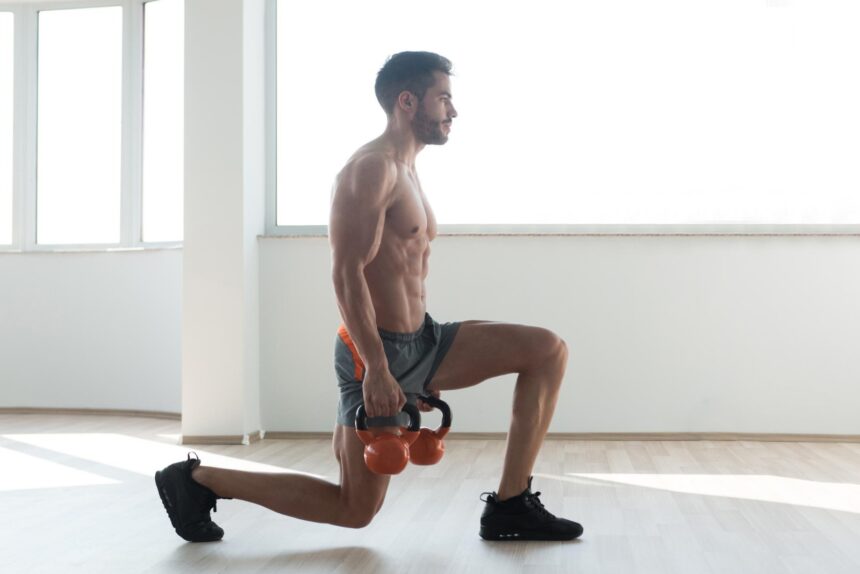
Split Squat
What it helps with
This reduces spinal loading by training one leg at a time.
What you’ll feel working
You will feel the front leg glute and thigh working strongly.
How to do it
- Stand in a staggered stance.
- Keep torso upright.
- Bend both knees slowly.
- Lower until back knee nears the floor.
- Keep weight over front foot.
- Push through front foot to stand.
- Repeat before switching sides
Breathing
Inhale as you lower. Exhale as you rise.
Common mistakes (with fixes)
- Leaning forward excessively: Keep torso upright.
- Front knee drifting inward: Align knee over foot.
- Taking too short a step: Adjust stance for comfort.
Make it easier
- Use bodyweight only.
- Hold onto support.
- Reduce depth slightly.
Make it harder
- Add dumbbells.
- Increase repetition range.
- Slow the lowering phase.
Best for
Useful for athletes and those managing back sensitivity.
Quick Takeaway
- Start with controlled bodyweight work.
- Progress gradually with load.
- If pain decreases, your pattern is improving.
Level Guide
Beginner
- Focus on: Learning stable posture and controlled depth.
- Avoid: Heavy barbell squats too early.
- Progress safely: Increase weight only when pain-free.
Intermediate
- Focus on: Balanced hip and core strength.
- Avoid: Letting fatigue break form.
- Progress safely: Alternate heavy and moderate sessions.
Advanced
- Focus on: Efficient force production.
- Avoid: Excessive volume under fatigue.
- Progress safely: Cycle intensity over weeks.
Done-for-You Workouts
Home Workout
- Box Squat: 3 × 10 reps
- Split Squat: 3 × 8 reps each leg
- Rest: 60–90 seconds
This builds strength while minimizing spinal load. Perform 2–3 times weekly.
Gym Workout
- Goblet Squat: 4 × 8 reps
- Split Squat: 3 × 10 reps
- Rest: 90 seconds
This reinforces posture before progressing to barbell work.
Martial Arts-Focused Workout
- Goblet Squat: 3 × 8 reps
- Split Squat: 3 × 6 reps
- Core Stability Hold: 3 × 30 seconds
- Rest: 90 seconds
This supports powerful stance changes and kicking strength.
Safety & Injury Prevention
Warning signs to stop
- Sharp or shooting pain, which may indicate strain.
- Pain radiating down the leg, which may suggest nerve irritation.
- Loss of strength suddenly, which requires rest.
How to modify safely
- Reduce weight immediately if discomfort increases.
- Shorten depth until pain-free.
- Increase rest days between sessions.
When to seek help
If pain persists for more than two weeks despite lighter training, consult a qualified professional.
Common Mistakes & Misconceptions
- “Squats are bad for your back.” This belief comes from poor examples; correct technique distributes load safely.
- “More weight fixes weakness.” This happens due to impatience; build capacity gradually instead.
- “Back pain means stop forever.” Often pain signals overload, not permanent damage; adjust and rebuild.
Mindset & Long-Term Progress
Stay consistent with moderate loads and perfect form.
Track improvements in pain-free range of motion and strength.
Progress slowly so tissues adapt safely.
Rebuilding Strong, Pain-Free Squats
Squats and lower back pain are often linked because of poor technique, not because squats are dangerous.
When hips, legs, and core share the work properly, squats strengthen the spine rather than harm it.
Start with controlled variations, progress gradually, and respect pain signals.
Next Steps
- Practice box squats to rebuild control.
- Strengthen one leg at a time with split squats.
- Add load only when completely pain-free.
With patience and smart training, you can squat confidently and safely again.
FAQ
Can squats cause herniated discs?
Improper heavy lifting may increase risk, but proper form reduces stress.
Should I stop squatting if my back hurts?
Reduce load and assess form first before stopping completely.
Are front squats better for back pain?
They often reduce spinal loading but must still be done correctly.
How often should I squat with mild discomfort?
Two lighter sessions per week is usually appropriate.
Do stronger glutes reduce back pain?
Yes, stronger glutes help share load and protect the spine.