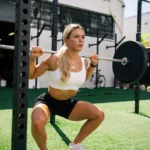

Starting a beginner strength training program for women can feel confusing at first. Many women worry about doing exercises incorrectly or gaining too much muscle too quickly.
In reality, strength training builds a strong, healthy body without automatically creating a bulky appearance. Muscle growth happens gradually and depends on training intensity, nutrition, and time.
The right program helps improve strength, posture, confidence, and long-term health.
By the end of this guide, you will understand how a beginner strength training program for women works, how to perform key exercises safely, and how to follow simple weekly routines that build strength step by step.
The Basics of Strength Training for Women
Strength training means using resistance to make muscles stronger. Resistance can come from body weight, dumbbells, resistance bands, or gym machines.
When muscles work against resistance, tiny changes happen inside the muscle fibers. Over time, the body adapts by becoming stronger and more capable.
This process is called progressive adaptation, which means the body gradually improves when it is challenged regularly.
Key Terms
- Resistance Training
Any exercise where muscles work against a load such as weights or body weight. - Repetition (Rep)
One complete movement of an exercise. - Set
A group of repetitions performed without stopping. - Progression
Slowly increasing difficulty so the body continues to improve.
Quick Takeaway
- Strength training helps build stronger muscles and bones
- Women gain strength without becoming bulky quickly
- Consistent practice leads to steady progress
- Simple exercises are enough for beginners to start
Why Strength Training Matters for Women
Strength training offers benefits that extend far beyond appearance.
It improves health, movement, and confidence in everyday life.
Key Benefits
- Improves muscle strength
Stronger muscles make daily activities like lifting, climbing stairs, and carrying groceries easier. - Supports bone health
Resistance training stimulates bone tissue, which helps reduce long-term risk of bone weakness. - Boosts metabolism
Muscle tissue uses energy even at rest, which helps support healthy body composition. - Improves posture and balance
Strengthening the back and core helps maintain upright posture and reduces strain from sitting. - Builds confidence
Learning new movements and seeing progress increases confidence both inside and outside the gym.
Quick Takeaway
- Strength training supports long-term health
- Strong muscles protect joints and posture
- Confidence grows with physical progress
- Consistency matters more than intensity at first
Beginner Strength Training Exercises for Women
The exercises below form a balanced beginner program. They train the major muscle groups safely and effectively.
Bodyweight Squat
What it helps with
Squats strengthen the lower body and help develop strong legs and hips.
What you’ll feel working
You will feel the thighs, hips, and glute muscles working as you move up and down.
How to do it
- Stand with feet slightly wider than hip width.
- Keep your chest upright.
- Slowly bend your knees.
- Lower your hips toward the floor.
- Stop when thighs approach parallel to the ground.
- Keep heels on the floor.
- Push through your feet to stand up.
- Return to the starting position.
Breathing
Inhale as you lower down and exhale as you stand back up.
Common mistakes
- Leaning too far forward: Keep the chest upright while lowering.
- Knees collapsing inward: Keep knees aligned with toes.
- Heels lifting: Focus on keeping the whole foot on the floor.
Make it easier
- Sit down onto a chair and stand up again.
- Reduce the squat depth slightly.
Make it harder
- Hold a dumbbell close to the chest.
- Slow the lowering phase of the squat.
Best for
Beginners building foundational lower-body strength.
Glute Bridge
What it helps with
This exercise strengthens the hips and improves lower-body stability.
What you’ll feel working
The glutes and hamstrings will activate as the hips lift upward.
How to do it
- Lie on your back with knees bent.
- Place feet flat on the floor.
- Keep arms resting beside your body.
- Press your feet into the floor.
- Lift your hips upward.
- Pause briefly at the top.
- Lower your hips slowly.
- Repeat the movement.
Breathing
Exhale as you lift the hips and inhale as you lower.
Common mistakes
- Arching the lower back: Focus on lifting through the hips.
- Feet too far away: Keep feet close enough to bend knees comfortably.
- Moving too quickly: Slow movements increase muscle activation.
Make it easier
- Lift hips only halfway.
- Hold the position for a shorter time.
Make it harder
- Perform the movement with one leg.
- Hold a weight across the hips.
Best for
Strengthening hips and improving posture.
Quick Takeaway
- Lower body strength supports everyday movement
- Squats and bridges build foundational strength
- Control and balance are more important than speed
Dumbbell Row
What it helps with
Rows strengthen the upper back and improve posture.
What you’ll feel working
Muscles between the shoulder blades and the back of the shoulders will activate.
How to do it
- Hold a dumbbell in one hand.
- Place the opposite hand on a bench or chair.
- Bend slightly forward at the hips.
- Let the arm holding the weight hang down.
- Pull the weight upward toward your torso.
- Pause briefly near the ribcage.
- Lower the weight slowly.
- Repeat before switching sides.
Breathing
Exhale as you pull the weight and inhale as you lower it.
Common mistakes
- Using momentum: Lift the weight slowly with control.
- Rounding the back: Keep the spine neutral and stable.
- Pulling too high: Stop the movement near the ribs.
Make it easier
- Use a lighter dumbbell.
- Reduce the number of repetitions.
Make it harder
- Pause longer at the top.
- Perform slower repetitions.
Best for
Improving upper-body strength and posture.
Push-Up
What it helps with
Push-ups strengthen the chest, shoulders, and arms.
What you’ll feel working
You will feel the chest, shoulders, and arm muscles working together.
How to do it
- Start in a plank position.
- Place hands slightly wider than shoulders.
- Keep the body in a straight line.
- Bend your elbows slowly.
- Lower your chest toward the floor.
- Stop just above the ground.
- Push back up to the starting position.
- Repeat the movement.
Breathing
Inhale as you lower and exhale as you push upward.
Common mistakes
- Hips dropping: Keep the body aligned from shoulders to feet.
- Elbows flaring too wide: Keep elbows slightly angled toward the body.
- Partial range: Lower the body fully before pushing up.
Make it easier
- Perform push-ups from the knees.
- Place hands on a bench or wall.
Make it harder
- Elevate the feet.
- Slow the lowering phase.
Best for
Building upper-body pushing strength.
Quick Takeaway
- Upper-body strength improves posture and daily tasks
- Rows and push-ups balance pulling and pushing muscles
- Beginners should prioritize controlled movement
Dumbbell Shoulder Press
What it helps with
This exercise builds shoulder strength and stability.
What you’ll feel working
Shoulder muscles and upper arms will work during the pressing motion.
How to do it
- Sit or stand holding dumbbells at shoulder level.
- Keep elbows slightly in front of the body.
- Press the weights upward.
- Extend arms overhead.
- Pause briefly at the top.
- Lower the weights slowly.
- Return to shoulder level.
- Repeat the movement.
Breathing
Exhale while pressing upward and inhale while lowering.
Common mistakes
- Arching the back: Keep the torso upright.
- Using too much weight: Start with lighter weights.
- Moving quickly: Control the movement.
Make it easier
- Use one dumbbell at a time.
- Perform the exercise seated.
Make it harder
- Slow the lowering phase.
- Increase repetitions gradually.
Best for
Developing shoulder strength and stability.
Plank
What it helps with
Planks strengthen the core, which supports the spine and posture.
What you’ll feel working
You will feel tension in the abdominal muscles and shoulders.
How to do it
- Place forearms on the floor.
- Extend legs behind you.
- Keep the body straight from head to heels.
- Engage the abdominal muscles.
- Hold the position steadily.
- Breathe normally.
- Lower to rest after the hold time.
Breathing
Maintain steady breathing throughout the hold.
Common mistakes
- Hips sagging: Lift hips to align with shoulders.
- Holding breath: Continue slow breathing.
- Looking forward: Keep the neck neutral.
Make it easier
- Perform the plank from the knees.
- Hold for shorter durations.
Make it harder
- Extend the hold time.
- Lift one foot briefly.
Best for
Improving core strength and posture.
Quick Takeaway
- Shoulder and core strength improve overall stability
- Controlled repetitions are key for beginners
- Progress slowly by increasing repetitions or time
Level Guide
Beginner
- Focus on learning movement patterns
Proper form builds the foundation for safe progress. - Use light resistance
Light weights allow better control during early sessions. - Train 2–3 times per week
This schedule allows recovery between sessions.
Intermediate
- Increase resistance gradually
Progress happens when muscles face slightly greater challenges. - Add additional sets
More training volume can support further strength development. - Improve exercise control
Slower movements increase muscle engagement.
Advanced
- Increase training frequency
More frequent sessions support higher training capacity. - Combine strength and athletic training
This improves overall performance. - Monitor recovery carefully
Rest and nutrition become more important at higher workloads.
Done-for-You Workouts
Home Workout Plan
- Squats – 3 sets of 12 reps
- Push-ups – 3 sets of 8 reps
- Glute Bridges – 3 sets of 12 reps
- Plank – 3 sets of 30 seconds
This routine works well three times per week and builds full-body strength using minimal equipment.
Gym Workout Plan
- Squats – 3 sets of 10 reps
- Dumbbell Row – 3 sets of 10 reps
- Dumbbell Shoulder Press – 3 sets of 10 reps
- Plank – 3 sets of 30 seconds
This routine trains all major muscle groups and supports steady strength development.
Martial Arts Strength Routine
- Squats – 3 sets of 12 reps
- Glute Bridges – 3 sets of 12 reps
- Push-ups – 3 sets of 10 reps
- Plank – 3 sets of 40 seconds
This routine focuses on lower-body strength and core stability, which are essential for kicking, grappling, and balance.
Safety & Injury Prevention
Warning signs to stop
- Sharp pain in joints: Pain signals the movement should stop immediately.
- Persistent muscle strain: Rest if soreness does not improve.
- Dizziness or fatigue: Pause and recover before continuing.
How to modify safely
- Reduce resistance
Lighter weights allow better control. - Shorten workout duration
Short sessions help beginners adapt gradually. - Focus on technique first
Proper form protects joints and muscles.
When to rest or seek help
If discomfort continues for several days, consult a qualified health professional.
Common Mistakes & Misconceptions
- Believing strength training causes bulk quickly
Muscle growth takes time and specific training intensity. - Using heavy weights too soon
Beginners often choose weights that reduce proper form. - Skipping rest days
Muscles grow stronger during recovery. - Comparing progress to others
Individual progress rates vary significantly.
Mindset & Long-Term Progress
Strength training is a long-term process.
Focus on building consistency rather than chasing rapid changes.
Track progress through small improvements in strength, balance, and confidence.
Patience allows the body to adapt safely and sustainably.
Build Strength With Confidence
A beginner strength training program for women provides a powerful foundation for long-term health, strength, and confidence. Simple exercises performed consistently can transform how the body moves and feels.
Progress does not require extreme workouts. Steady practice, proper form, and patience create lasting results.
Next steps
- Start with two or three weekly workouts
This schedule allows your body to adapt while building strength. - Focus on mastering technique
Learning good movement patterns supports long-term progress. - Track small improvements
Recording workouts helps maintain motivation and consistency.
Strength grows step by step when training becomes a regular habit.
FAQ
Will strength training make women bulky?
Most women develop strength and muscle tone rather than large muscle size.
How often should beginners train?
Two to three strength sessions per week is a good starting point.
Do beginners need heavy weights?
Light to moderate resistance is sufficient for early progress.
How long does it take to see results?
Many people notice strength improvements within four to six weeks.
Is strength training safe for beginners?
Yes, when exercises are performed with proper technique and appropriate resistance.
Can strength training help posture?
Strengthening the back and core can significantly improve posture.
Should women do cardio and strength training?
Yes, combining both supports overall fitness and health.