If you are not seeing results from exercise, it does not automatically mean your workouts are useless.
Most beginners get stuck because one part of the system is missing: consistency, progression, food, sleep, recovery, or realistic tracking. Exercise works best when your body gets a clear training signal, then enough time and support to adapt.
This applies whether you train at home, lift weights, run, play sports, or practice martial arts.
The goal is not to train harder at random. The goal is to find the weak link and fix that first.
The Short Answer
You may not be seeing results because your workouts are active, but not structured.
A workout can make you sweat and still fail to move you toward your goal. A good beginner plan should match what you want: strength, stamina, fat loss, better movement, or better sports performance.
For general health, the CDC recommends adults aim for at least 150 minutes of moderate-intensity activity each week, plus 2 days of muscle-strengthening activity. Beginners do not need to hit this perfectly right away, but it is a useful target to build toward. CDC: Adult Activity Guidelines
Quick Self-Check
Before changing your entire routine, ask yourself:
- Have I trained consistently for at least 4–6 weeks?
- Am I following the same basic plan long enough to measure progress?
- Am I making the workouts slightly harder over time?
- Am I eating and sleeping enough to recover?
- Am I tracking more than body weight?
If you answered “no” to several of these, the issue may not be effort. It may be your training system.
1. You Have Not Been Consistent Long Enough
A few hard workouts are not the same as a routine.
Many beginners train hard for one week, miss the next week, then restart. That makes progress difficult because the body does not get a repeated signal.
A better beginner target is simple:
- 2 days of strength training
- 2 days of easy cardio, walking, sports, or conditioning
- 1–2 short mobility sessions
- 1–2 rest or active recovery days
This does not need to be perfect. It needs to be repeatable.
2. Your Workout Is Not Progressing
Your body adapts to what you repeatedly ask it to do.
If you do the same exercises, same reps, same weight, and same difficulty every week, progress may slow down. This is where progressive overload matters.
Progressive overload means gradually increasing the challenge. You can do this by:
- Adding 1–2 reps
- Adding one set
- Using slightly more weight
- Slowing the movement down
- Improving your range of motion
- Walking, running, or cycling a little longer
You do not need to destroy yourself. You only need a small, controlled increase over time.
For example, if 3 sets of 8 squats now feel easy, try 3 sets of 10. When that feels controlled, try 3 sets of 12.
3. Your Goal and Workout Do Not Match
Different goals need different training.
If your goal is strength, you need resistance training. If your goal is stamina, you need cardio or conditioning. If your goal is fat loss, exercise can help, but food intake and daily movement matter too.
This is where beginners often get confused.
A home trainee who wants visible muscle tone may not need more random cardio. They may need a simple strength plan.
A martial arts beginner who gets tired in class may not need harder leg workouts. They may need easier conditioning, better breathing, and better recovery between sessions.
Match the workout to the result you want.
4. Your Food Does Not Support Your Training
Food affects workout results.
If you often train under-fueled, you may feel weak, tired, or lightheaded. If your goal is fat loss but your overall intake is higher than you realize, weight change may be slow.
Mayo Clinic notes that eating or drinking carbohydrates before exercise can help performance and may allow you to work out longer or at a higher intensity. Mayo Clinic: Eating and Exercise
A simple beginner approach:
- Before training: banana, toast, oatmeal, rice, yogurt, or a light meal
- After training: protein plus carbs, such as eggs and rice, chicken and potatoes, tofu and noodles, or Greek yogurt and fruit
- During the day: regular meals, not one “perfect” meal after a poor day of eating
You do not need a complicated diet. You need enough consistent nutrition to support the work.
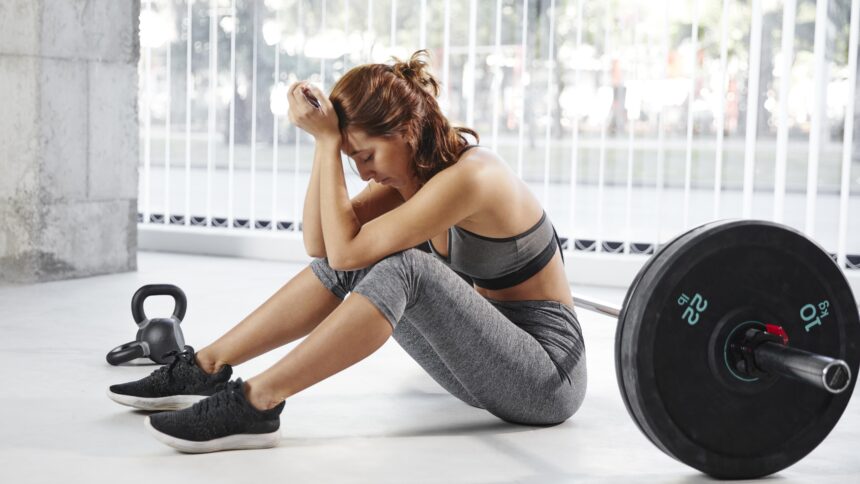
5. You Are Not Recovering Well Enough
Exercise creates stress. Recovery is when your body adapts.
If you train hard but sleep poorly, skip meals, stay stressed, or never take easier days, your progress may stall.
Sleep is a major part of recovery. Sleep Foundation explains that athletes need training, healthy meals, rest, recovery, and sleep, and that performance can suffer when one area is lacking. Sleep Foundation: Sleep and Athletic Performance
Poor recovery can feel like:
- Constant soreness
- Low motivation
- Feeling weaker instead of stronger
- Heavy legs during training
- Poor sleep
- Low energy during normal workouts
If every workout feels worse than the last, more intensity is probably not the answer.
6. You Are Tracking the Wrong Results
Many beginners only track weight.
That can be misleading.
Exercise results can also show up as:
- More reps
- Better form
- Longer walks or runs
- Better balance
- Better energy
- Faster recovery between sets
- Clothes fitting differently
- Less fatigue during sports or daily life
If you started with 5 push-ups and can now do 10, that is progress. If you used to walk 10 minutes and now walk 25, that is progress.
Track performance, not just the scale.
Real Beginner Example 1: The Home Trainee
A beginner trains at home 3 days per week using random workout videos.
They sweat a lot and feel sore, but after three weeks, they do not feel stronger. The issue is not laziness. The issue is that every workout is different, so nothing is being measured.
What they changed:
- Chose 4 basic exercises
- Repeated them for 4 weeks
- Tracked reps for squats, incline push-ups, glute bridges, and planks
- Added 1–2 reps when form stayed clean
After 2–4 weeks, realistic progress might look like better control, less soreness, and more reps. The mirror may still change slowly, but the training is finally moving somewhere.
Real Beginner Example 2: The Martial Arts Beginner
A beginner kickboxer lifts twice per week and goes to class twice per week.
They feel tired in class and assume they need more conditioning. But their lifting sessions, classes, and extra cardio are all hard. They are not recovering.
What they changed:
- Reduced hard conditioning to once per week
- Ate a light carb-based snack before class
- Took one full rest day
- Tracked energy during rounds
After 2–4 weeks, progress might look like better energy, less heavy-leg fatigue, and more consistent class attendance.
Sometimes the answer is not more work. It is better-balanced work.
What I Would Do First
If you are not seeing results from exercise, start here.
1. Pick One Main Goal
Choose one priority:
- Get stronger
- Improve stamina
- Lose fat
- Build consistency
- Move better
- Support a sport or martial art
Do not chase every goal equally at once.
2. Follow One Simple Plan for 4 Weeks
Try this basic structure:
- Day 1: Full-body strength
- Day 2: Easy cardio or walking
- Day 3: Rest or mobility
- Day 4: Full-body strength
- Day 5: Easy cardio, sport, or martial arts practice
- Day 6: Light movement
- Day 7: Rest
If you already play sports or train martial arts, count that as training stress.
3. Track One Number
Pick one:
- Reps
- Sets
- Time
- Distance
- Weight used
- Rounds completed
- Energy level
If you track nothing, progress becomes guesswork.
4. Add One Small Progression
After 1–2 weeks, add a small challenge.
Examples:
- Add 2 reps
- Add 5 minutes to a walk
- Add one set
- Use a slightly harder exercise
- Reduce rest by 10 seconds
Only progress if your form still looks controlled.
Common Mistakes and Simple Fixes
Mistake: Changing workouts too often
Fix: Keep your main routine for at least 4 weeks before judging it.
Mistake: Thinking soreness means progress
Fix: Track performance. Soreness is not required for improvement.
Mistake: Going too hard every session
Fix: Make most workouts challenging but repeatable.
Mistake: Ignoring food and sleep
Fix: Eat enough to train well and treat sleep as part of recovery.
Mistake: Using only the scale
Fix: Track strength, stamina, consistency, energy, and how your clothes fit.
How to Progress Safely
Increase only one thing at a time.
Do not add more weight, more reps, more sets, and less rest all in the same week. That makes it harder to recover and harder to know what worked.
A safe beginner progression looks like this:
- Week 1: Learn the routine
- Week 2: Repeat with better form
- Week 3: Add a few reps or minutes
- Week 4: Add one small challenge
For home training, progression may mean slower reps or better control.
For martial arts and sports, progression may mean calmer breathing, cleaner movement, and better pacing — not just more exhaustion.
When to Stop or Modify
Do not push through pain or unusual symptoms.
Stop or modify the workout if you notice:
- Sharp pain
- Chest pain or pressure
- Dizziness
- Faintness
- Unusual shortness of breath
- Nausea that does not settle
- Joint pain that gets worse
- Technique breaking down badly
Cleveland Clinic explains that delayed onset muscle soreness usually improves within a few days, while pain lasting a week or more may suggest an injury such as a strain. Cleveland Clinic: DOMS
Reduce difficulty by using less weight, doing fewer reps, choosing an easier variation, taking longer rest, or shortening the session.
If you have an injury, medical condition, breathing symptoms, or recurring pain, ask a qualified professional before changing your training.
Coach’s Note
A beginner does not need a perfect plan.
They need a plan they can repeat, measure, and recover from.
If someone is frustrated with slow progress, the first thing to check is their weekly pattern. Are they training consistently? Are they making anything slightly harder? Are they sleeping and eating enough? Are they tracking the right signs?
For martial arts and sports beginners, strength and conditioning should support practice. If your workouts leave you too tired to learn skills, the plan needs adjusting.
Editorial Note
This article is written for beginners who want practical, safe, no-confusion training guidance.
The goal is to help you understand why exercise progress may feel slow and what to adjust first. It focuses on realistic progressions, clear decision-making, and training habits that can support general fitness, home workouts, martial arts, and sports practice.
Editorial note: This article is for general fitness education. It is not medical advice. If you have pain, injury, breathing symptoms, or a medical condition, ask a qualified professional before starting or changing your training.
FAQ
Why am I not seeing results from exercise after a month?
One month may be too early for major visible changes. Look for early progress like better stamina, better form, more reps, and better consistency.
Should I work out harder if I am not seeing results?
Not always. First check consistency, progression, food, sleep, and recovery. If you already feel exhausted, harder workouts may make progress worse.
Can I exercise and still not lose weight?
Yes. Weight change depends on food intake, daily movement, water retention, muscle gain, sleep, and consistency. Exercise helps, but it does not guarantee weight loss by itself.
How long does it take to see workout results?
Many beginners notice strength or stamina changes within 3–6 weeks. Visible body changes often take longer, usually 6–12 weeks or more.
Do beginners need progressive overload?
Yes, but it should be simple. Add reps, time, sets, control, or slightly more resistance gradually.
Why am I sore but not seeing results?
Soreness means your body experienced stress, but it does not prove the workout matched your goal. Track performance instead.
Sources and Further Reading
- CDC: Adult Activity Guidelines — General activity and strength-training recommendations for adults.
- Mayo Clinic: Eating and Exercise — Practical guidance on food timing and workout performance.
- Sleep Foundation: Sleep and Athletic Performance — Explains why sleep and recovery matter for performance.
- Cleveland Clinic: Delayed Onset Muscle Soreness — Helpful reference for soreness, recovery, and when pain may need attention.
Conclusion
If you are not seeing results from exercise, do not assume you are failing.
Check the basics first: consistency, progression, food, sleep, recovery, and what you are tracking.
Most beginners do not need a harder plan. They need a clearer plan they can repeat.
Choose a routine, follow it long enough to measure progress, make it slightly harder over time, and recover properly. That is where real fitness progress usually starts.