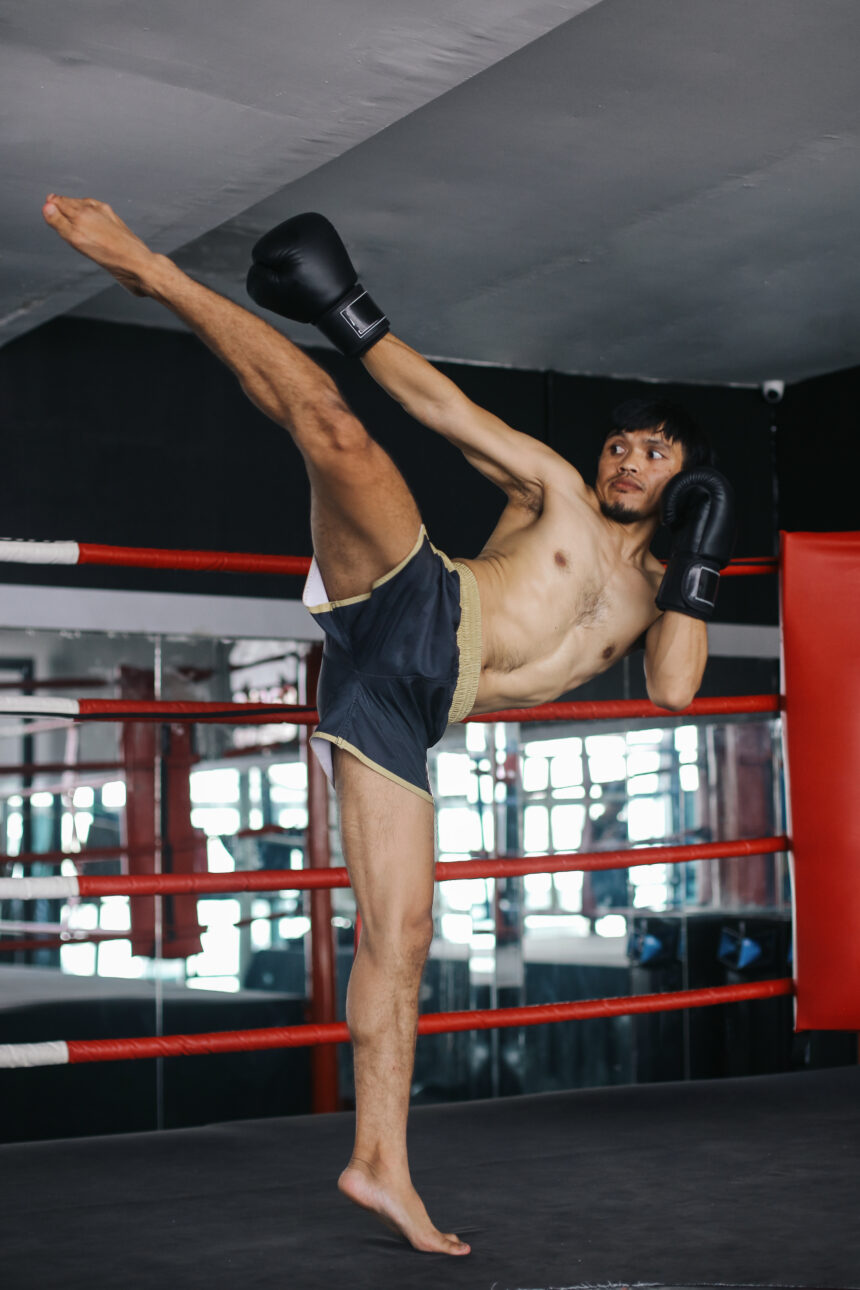
If your balance bad during kicks problem shows up every time you throw a front kick, roundhouse kick, or side kick, you are not alone.
Most beginners do not lose balance because they are hopeless at kicking. They lose balance because kicking asks the body to do several difficult things at once: stand on one leg, lift the knee, turn the hip, control the foot, and return to stance.
That is a lot for a new martial artist.
The fix is usually not to kick harder. It is to improve kicking balance by cleaning up your base, hip strength, control, foot position, and slow practice.
The Short Answer
Your balance is probably bad during kicks because one of four things is breaking down:
- Base: Your standing foot or standing leg is not stable.
- Chamber: You cannot lift the knee without wobbling.
- Pivot: Your standing foot is not turning when the kick requires it.
- Return: You are not pulling the kick back before stepping down.
Think of this as the 4-point kicking balance check: base, chamber, pivot, return.
If one part fails, the kick usually falls apart.
A beginner might blame weak legs, poor flexibility, or lack of confidence. Those can matter, but many balance problems start with something simpler: the foot is in the wrong place, the kick is too high, or the leg is dropping instead of returning under control.
Why Kicking Balance Matters
A kick is not finished when your foot touches the target.
A useful kick should let you recover, defend, move, or kick again.
Better kicking balance can help you:
- Return to stance without stumbling.
- Avoid spinning past the target.
- Keep your standing knee more comfortable.
- Reduce wasted movement.
- Build cleaner technique before adding power.
- Stay safer during bag work, pad work, and light sparring.
Balance training is also a normal part of general fitness. Mayo Clinic notes that balance exercises can help people feel more secure and can be included with physical activity and strength training.
For martial arts, that idea becomes very practical: if you cannot control the kick, you cannot reliably use the kick.
The 60-Second Kicking Balance Test
Use this quick test before you change your whole training plan.
Stand near a wall, chair, or railing so you can touch it lightly if needed.
Step 1: Test the chamber
- Stand in your fighting stance.
- Lift your kicking knee.
- Hold the chamber for 5 seconds.
- Put the foot down quietly.
If you wobble here: your issue starts before the kick. Work on single-leg balance, hip control, and lower chambers.
Step 2: Test the extension
- Lift the knee again.
- Slowly extend the kick halfway.
- Pull the knee back.
- Step down quietly.
If you wobble during extension: the kick may be too high, too fast, or too far from your current control level.
Step 3: Test the return
- Chamber.
- Extend.
- Re-chamber.
- Return to stance.
If you fall after the kick: your issue is likely the return phase. You are probably letting the leg drop instead of controlling it back.
Step 4: Test the standing foot
Repeat the same drill and watch the standing foot.
Ask:
- Is the foot flat and stable?
- Is the standing knee slightly bent?
- Does the foot pivot when the kick requires it?
- Does the knee feel twisted or trapped?
If the standing knee feels twisted during a pivoting kick, stop and reset your foot position instead of forcing the kick.
What Your Balance Problem Usually Means
Use these simple decision rules.
If you fall backward
You may be leaning away from the kick too much or trying to kick too high.
Check first: kick height and upper body position.
Simple fix: lower the target and keep your head closer to being stacked over your hips.
If you fall forward
You may be throwing the leg out and letting it drop.
Check first: the re-chamber.
Simple fix: pull the knee back before stepping down.
If you spin past the target
This often happens with roundhouse kicks.
Check first: standing foot pivot and hip rotation.
Simple fix: practice the pivot separately, then throw low roundhouse kicks with a pause after each one.
If your standing knee wobbles
Your hip, ankle, and foot may not be stabilizing well yet.
Check first: single-leg control.
Simple fix: use chamber holds and single-leg stands before adding more kicks.
If you only lose balance on high kicks
The kick is probably above your current control level.
Check first: height.
Simple fix: train the same kick lower until the movement is clean.
Balance Problems by Kick Type
Different kicks fail in different ways. This is where beginners can make faster progress by fixing the right thing.
Front Kick Balance Problems
A front kick often fails because the beginner leans back, pushes the foot out too far, or drops the leg after extension.
What a bad rep looks like
- The upper body falls backward.
- The kicking foot lands heavily.
- The stance disappears after the kick.
- The knee does not return before the foot drops.
Simple front kick fix
Use this rhythm:
- Knee up.
- Kick out.
- Knee back.
- Foot down.
Say it slowly while you practice.
If you cannot do that at waist height, lower the kick to knee height.
Roundhouse Kick Balance Problems
A roundhouse kick often fails because the standing foot does not pivot before the hip turns.
When the hip wants to rotate but the standing foot is stuck, the body may twist at the knee, spin past the target, or fall sideways.
What a bad rep looks like
- You spin after hitting the bag.
- Your standing foot stays glued to the floor.
- Your knee feels twisted.
- Your shoulders turn faster than your base.
- You land in a random stance.
Simple roundhouse kick fix
Practice the pivot without the kick.
- Stand in stance.
- Pivot the standing foot.
- Let the hip turn.
- Return to stance.
- Repeat slowly.
Then add a low roundhouse kick.
Do not chase power until you can kick and return to stance.
Side Kick Balance Problems
A side kick often fails because the chamber is rushed, the hip is not lined up, or the kick is too high.
Beginners often try to copy a high side kick before they can hold the chamber.
What a bad rep looks like
- The body tips over.
- The foot pushes out but the hip collapses.
- The kick lands with no control.
- The standing foot is too narrow under the body.
- You cannot pull the leg back.
Simple side kick fix
Practice the side kick chamber first.
- Lift the knee.
- Turn the hip slightly.
- Keep the standing knee soft.
- Hold for 3 seconds.
- Put the foot down quietly.
Only add the kick when the chamber is stable.
The Clean Rep Standard
Before you increase kick height, speed, or power, use this standard.
A clean rep means:
- No hopping.
- No sharp pain.
- No grabbing hard for support.
- No heavy foot drop.
- No uncontrolled spinning.
- Standing knee feels comfortable.
- You can re-chamber before stepping down.
- You return to a useful stance.
Do not increase kick height until you can perform 5 clean reps per side.
That one rule can prevent a lot of wasted practice.
Main Reasons Beginners Lose Balance During Kicks
1. The Standing Foot Is Wrong
Your standing foot is your base.
If the base is too narrow, stuck, over-turned, or poorly aligned, your kick has nowhere stable to come from.
For many kicks, the standing foot either needs to stay rooted or pivot at the right time.
A front kick usually needs a stable base. A roundhouse kick usually needs a pivot. A side kick usually needs the standing foot and hip to line up so the body is not fighting itself.
If you feel pressure twisting through the standing knee, stop and adjust your foot.
2. The Chamber Is Weak or Rushed
The chamber is the knee-lift position before the kick.
Many beginners skip it. They swing the leg from the floor and hope the kick lands.
That usually creates poor balance.
A good chamber helps you aim the kick, control the hip, and return the leg safely.
If your chamber is shaky, do not add speed yet.
3. The Hip Cannot Control the Leg Yet
Kicking is not just a lower-leg movement.
Your hips lift, rotate, stabilize, and guide the leg. The standing-side hip keeps your pelvis from dropping, while the kicking-side hip helps lift and return the leg.
A systematic review on hip abductor strength, activation, balance, and mobility found that hip abductor strength is important for balance and mobility across adult age groups.
For beginners, this does not mean you need complicated exercises. It means hip control matters, especially when standing on one leg.
4. You Are Kicking Too Fast
Speed can hide poor control.
A fast kick may feel better because you rush through the unstable part. But if you cannot land cleanly, the kick is not reliable yet.
Slow practice shows you exactly where balance breaks.
That is useful information, not failure.
5. The Upper Body Is Overcorrecting
Beginners often throw the upper body backward to make the leg go higher.
That may lift the foot, but it also moves your center of mass away from your base.
Some lean is normal in certain kicks. A big uncontrolled lean usually means the kick is too high or too rushed.
Lower the target before you blame flexibility.
6. You Are Skipping the Re-Chamber
The re-chamber is when you pull the kicking leg back before stepping down.
This is one of the most important beginner corrections.
If you kick and let the leg drop, your body has to chase the foot. That is why you fall forward or land heavily.
If you kick, re-chamber, and step down with control, you stay in charge of the movement.
What This Looks Like in Real Training
Example 1: Beginner Kickboxer Spinning After Roundhouse Kicks
A beginner trains kickboxing three days per week. Their low roundhouse kick hits the bag, but they spin past the target and land sideways.
They think the problem is weak balance.
A coach would likely check the standing foot first.
The issue is that the hip is rotating, but the standing foot is not pivoting soon enough. The kick lands, the bag gives feedback, and the body keeps rotating because the base never controlled the turn.
What changed
They practiced:
- 10 slow pivots per side before kicking.
- Low roundhouse kicks only.
- One-second pause after every kick.
- Re-chamber before stepping down.
- No power increase until the landing was clean.
Realistic progress after 2–4 weeks
They may not have a powerful kick yet, but they should spin less, land in a more predictable stance, and feel less twisting through the standing knee.
That is real progress.
Example 2: Home Trainee Wobbling During Front Kicks
A home trainee practices front kicks in a small open space. They can lift the knee, but once they extend the foot, the standing leg shakes and the kicking foot slaps down.
They think they need stronger abs.
Core control may help, but the first issue is probably chamber control and leg return.
What changed
They practiced:
- Light wall support.
- 5-second chamber holds.
- Low front kicks only.
- Quiet foot placement.
- “Knee up, kick out, knee back, foot down” on every rep.
Realistic progress after 2–4 weeks
They may still wobble on some reps, but they should notice quieter landings, better control of the knee, and less need to grab the wall.
Example 3: Returning Martial Artist Trying to Kick Too High
Someone returns to martial arts after a long break. They remember being able to kick higher, so they immediately aim for head height.
Their balance feels terrible.
The likely issue is not that they forgot everything. Their current mobility, strength, timing, and confidence are not yet ready for the old target height.
What changed
They practiced:
- Waist-height kicks only.
- 3 clean reps per side instead of 10 sloppy reps.
- More rest between sets.
- No high kicks until low and mid-level kicks felt stable.
Realistic progress after 2–4 weeks
They may regain cleaner mid-level kicks first. High kicks should return later, after control improves.
What I Would Do First
If you are a beginner, start with fewer moving parts.
Do not start with harder drills, faster kicks, or higher targets.
Step 1: Pick One Kick
Choose one kick for two weeks.
Good options:
- Front kick
- Low roundhouse kick
- Low side kick chamber
Do not try to fix every kick at once.
Step 2: Lower the Target
Use a height you can control.
For most beginners:
- Front kick: knee to waist height
- Roundhouse kick: low thigh height
- Side kick: low to mid-level
A low controlled kick teaches more than a high sloppy kick.
Step 3: Use the 4-Point Check
For every rep, check:
- Base
- Chamber
- Pivot
- Return
If one part breaks, fix that part before continuing.
Step 4: Practice Slowly
Use slow reps on purpose.
A good beginner rep should feel controlled, not explosive.
Power comes later.
Step 5: Track Clean Reps
After each set, write down:
- Kick practiced
- Best clean height
- Clean reps per side
- Whether you used support
- Main mistake noticed
This makes progress easier to see.
Beginner Drills to Improve Kicking Balance
Drill 1: Single-Leg Stand
What it fixes: basic standing-leg control.
- Stand near a wall.
- Lift one foot slightly off the floor.
- Keep the standing knee soft.
- Hold for 10–20 seconds.
- Switch sides.
Do 2–3 rounds per side.
Bad reps look like
- Gripping the floor aggressively.
- Locking the standing knee.
- Leaning far to one side.
- Holding your breath.
Progress when
You can hold 20 seconds per side without hopping or grabbing support.
Drill 2: Chamber Hold
What it fixes: control before the kick.
- Stand in stance.
- Lift the knee into chamber.
- Hold for 3–5 seconds.
- Put the foot down quietly.
- Repeat 5 reps per side.
Bad reps look like
- Knee drops immediately.
- Torso falls backward.
- Standing knee caves inward.
- Foot slams down.
Progress when
You can hold 5 seconds and step down softly for 5 clean reps per side.
Drill 3: Chamber, Tap, Re-Chamber
What it fixes: control of the leg going out and coming back.
- Lift the knee.
- Lightly tap the foot forward or sideways.
- Pull the knee back.
- Step down into stance.
Do 2–3 sets of 5 slow reps per side.
Bad reps look like
- The leg drops after the tap.
- You fall forward.
- You skip the re-chamber.
- You rush the step down.
Progress when
The tap feels light and the foot lands quietly.
Drill 4: Slow Front Kick
What it fixes: front kick balance and re-chambering.
- Start in stance.
- Lift the knee.
- Extend the lower leg slowly.
- Pause for one second.
- Pull the knee back.
- Step down softly.
Do 3 sets of 3–5 reps per side.
Progress when
You can complete 5 clean reps per side without falling forward.
Drill 5: Pivot Practice
What it fixes: roundhouse kick balance.
- Stand in fighting stance.
- Keep your hands up.
- Pivot the standing foot.
- Let the hip turn.
- Return to stance.
Do 10 slow pivots per side.
Bad reps look like
- Knee twists while foot stays stuck.
- Heel cannot turn.
- Upper body spins first.
- You lose your stance after the pivot.
Progress when
The pivot feels smooth and the standing knee feels comfortable.
Drill 6: Low Roundhouse With Reset
What it fixes: balance after rotation.
- Start in stance.
- Pivot the standing foot.
- Throw a low roundhouse kick.
- Re-chamber.
- Return to stance and pause.
Do 3 sets of 3–5 reps per side.
Progress when
You can kick, land, and pause without spinning or stepping randomly.
A Simple 2-Week Beginner Plan
Use this plan 2–3 days per week.
Keep each session short. Ten to fifteen minutes is enough when the reps are focused.
Week 1: Find the Balance Break
Do:
- Single-leg stand: 2 rounds of 10–20 seconds per side
- Chamber hold: 2 sets of 5 per side
- Chamber, tap, re-chamber: 2 sets of 5 per side
- Slow front kick: 3 sets of 3 per side
Track this
Write down:
- Which side felt less stable
- Where balance broke: base, chamber, extension, or return
- Whether you needed wall support
- How many clean reps you completed
Main goal: find the weak link.
Week 2: Build Cleaner Kicks
Do:
- Single-leg stand: 2 rounds of 20 seconds per side
- Chamber hold: 2 sets of 5 per side
- Slow front kick: 3 sets of 5 per side
- Pivot practice: 10 reps per side
- Low roundhouse with reset: 3 sets of 3 per side
Track this
Write down:
- Clean reps per side
- Best controlled kick height
- Whether the foot landed quietly
- Whether you returned to stance
- Any pain, pinching, or unusual discomfort
Main goal: cleaner reps, not harder reps.
The CDC recommends adults include muscle-strengthening activity at least 2 days per week as part of general physical activity guidelines. For martial artists, appropriate strength work can support training, but it should be progressed gradually.
How to Adjust This for Martial Arts Training
For Kickboxing or Muay Thai
Focus on the standing foot pivot and stance recovery.
If the bag makes you spin, reduce power. Hit lighter and prove you can return to stance.
A clean low kick is more useful than a hard kick that turns your back.
For Taekwondo or Karate
Focus on chamber and re-chamber.
Many traditional kicking styles reward clean lines and control. Do not rush to high kicks before the knee position is stable.
Mid-level control should come before head-height ambition.
For MMA
Balance matters because a bad kick can expose you to counters or takedowns.
Practice every kick with an immediate defensive reset.
After the kick, your hands should still be useful and your stance should not be broken.
For Home Training
Use light support when needed.
Train in an open space with a non-slippery floor. Avoid loose rugs, furniture edges, pets, or anything you could trip over.
Home training should be controlled, not cramped and risky.
What a Coach Would Correct First
A coach would usually fix your base before the kick.
They might check:
- Is your stance too narrow?
- Is your standing foot turning when needed?
- Is your standing knee twisting?
- Does your hip drop when the knee lifts?
- Are you trying to kick too high?
- Can you re-chamber before stepping down?
A coach may lower your target, slow your rep, adjust your standing foot, and ask you to pause after the re-chamber.
If those corrections improve your balance immediately, the issue was likely control and position, not toughness.
Who Should Be Cautious?
Be cautious with kicking balance drills if you:
- Have current hip, knee, ankle, or lower back pain.
- Have dizziness, vertigo, or unexplained balance problems.
- Are returning after injury or a long training break.
- Feel sharp pain during kicking.
- Have a medical condition that affects balance, coordination, or joint stability.
- Are practicing on a slippery floor.
- Are trying high kicks before you can control low kicks.
If you are unsure whether kicking drills are appropriate for you, ask a qualified coach, physical therapist, or medical professional.
When to Stop or Modify
Stop or modify the drill if you feel:
- Sharp pain.
- Dizziness.
- Chest pain.
- Unusual shortness of breath.
- Numbness or tingling.
- Knee twisting or pinching.
- Hip pinching that does not improve when you lower the kick.
- Loss of control that makes you likely to fall.
MedlinePlus safety guidance for exercise includes stopping when symptoms such as shortness of breath, dizziness, or chest pain occur.
To reduce difficulty:
- Lower the kick.
- Slow the movement.
- Hold a wall lightly.
- Reduce the number of reps.
- Practice only the chamber.
- Stop before fatigue ruins your form.
Do not push through pain to prove toughness.
Pain changes the drill. It does not become a challenge to ignore.
How to Progress Safely
Progress one variable at a time.
Do not increase height, speed, power, and volume in the same session.
Use this order:
- Hold the chamber with support.
- Hold the chamber without support.
- Add a low slow kick.
- Add the re-chamber.
- Return to stance cleanly.
- Add moderate speed.
- Add light bag or pad contact.
- Add more height only if control stays solid.
A good rule:
Earn height with control. Earn speed with clean landings. Earn power last.
Common Mistakes and Simple Fixes
Mistake: Kicking Too High Too Soon
Fix: Lower the target until you can perform 5 clean reps per side.
High kicks are not wrong. High sloppy kicks are the problem.
Mistake: Dropping the Leg After the Kick
Fix: Practice the re-chamber.
Think: knee up, kick out, knee back, foot down.
Mistake: Locking the Standing Knee
Fix: Keep a soft bend in the knee.
A locked knee makes balance corrections harder and may make the leg feel stiff.
Mistake: Pivoting Too Late
Fix: Practice the pivot before the kick.
For roundhouse kicks, the standing foot should help the hip turn. The knee should not be forced to twist.
Mistake: Leaning Too Far Back
Fix: Lower the kick and keep your torso more controlled.
If you need a huge lean to reach the target, the target is too high for now.
Mistake: Training Only the Strong Side
Fix: Train both sides, but let the weaker side move slower.
Do not force the weaker side to match the stronger side’s height immediately.
Mistake: Adding Power Before Control
Fix: Use slow reps and clean landings first.
Power without recovery is not dependable martial arts technique.
What Progress Should Look Like
Progress may not look dramatic at first.
Good signs include:
- Your foot lands more quietly.
- You wobble less during the chamber.
- You can re-chamber before stepping down.
- Your standing knee feels more comfortable.
- You return to stance more often.
- You need less wall support.
- Your low kicks feel cleaner.
- You can tell where the mistake happened.
After 2–4 weeks, many beginners should expect small improvements, not perfect balance.
That might mean you still wobble sometimes, but you understand why.
That is a strong start.
Coach’s Note
Most beginners try to fix kicking balance by doing more full-speed kicks.
Sometimes that helps. Often it just repeats the same mistake.
A better approach is to slow the kick down until the weak link becomes obvious. Maybe the base is unstable. Maybe the chamber collapses. Maybe the pivot is late. Maybe the return is missing.
Once you know where the kick breaks, the fix becomes much clearer.
You do not need fancy drills at first. You need clean reps that teach your body where to stand, when to turn, and how to come back.
Black Belt Guy Training Perspective
This article is written for beginners who want practical, safe, no-confusion martial arts training guidance.
The goal is to help you make better training decisions: when to lower the kick, when to slow down, when to use support, when to stop, and when to progress.
This article focuses on realistic progressions, clear self-checks, and beginner-friendly coaching cues. It is general education and does not replace hands-on coaching or medical advice.
Editorial note: This article is for general fitness education. It is not medical advice. If you have pain, injury, breathing symptoms, or a medical condition, ask a qualified professional before starting or changing your training.
FAQ
Why do I lose balance when I kick?
You may lose balance because your standing foot is unstable, your chamber is weak, your pivot is late, or you are not re-chambering before stepping down. Start by checking where the kick breaks: base, chamber, pivot, or return.
How can I improve kicking balance as a beginner?
Practice low kicks slowly. Use chamber holds, single-leg stands, pivot drills, and controlled re-chambers. Do not increase height or speed until you can perform clean reps on both sides.
Should I practice kicks slowly?
Yes. Slow practice helps you find the exact point where balance breaks. If you cannot control a kick slowly, adding speed usually hides the problem instead of fixing it.
Why do I fall forward after kicking?
You are probably letting the leg drop after extension. Practice pulling the knee back before stepping down. This is the re-chamber phase, and it is important for balance and recovery.
Why do I spin after roundhouse kicks?
You may be over-rotating, pivoting too late, or hitting with more power than you can control. Practice the standing foot pivot first, then use low roundhouse kicks with a pause after each rep.
Is it okay to hold a wall while practicing kicks?
Yes. Light wall support is useful for beginners. The goal is to reduce support over time, not to use it forever. Avoid hanging on the wall or using it to force higher kicks.
Should I train high kicks to improve balance faster?
No. High kicks usually make balance harder. Build control with low and mid-level kicks first. Add height only when you can return to stance consistently.
How often should I practice kicking balance?
Two to three short sessions per week is a good starting point for many beginners. Keep the reps clean and stop before fatigue causes sloppy movement.
When should I ask a professional for help?
Ask a qualified professional if you have pain, dizziness, repeated falls, joint instability, numbness, tingling, or balance problems that do not improve with easier drills.
Sources and Further Reading
- Mayo Clinic: Balance exercises — Useful beginner reference on balance exercises and how balance training can fit alongside physical activity and strength training.
- CDC: Adult physical activity guidelines — General guidance on weekly physical activity and muscle-strengthening frequency for adults.
- PubMed: Hip abductor strength, activation, balance, and mobility — Research review relevant to hip strength, neuromuscular activation, balance, and mobility.
- MedlinePlus: Exercise safety guidance — General exercise safety reference that supports stopping when warning symptoms such as dizziness, chest pain, or shortness of breath occur.
Conclusion
Bad balance during kicks usually means one part of the movement needs more control.
Start with the 4-point check: base, chamber, pivot, return.
Lower the kick. Slow it down. Practice clean reps. Use support when needed. Build hip and standing-leg control before adding height, speed, or power.
A balanced kick is not just a kick that lands.
It is a kick you can recover from, repeat, and use safely in real training.