Many people want stronger shoulders but feel unsure where to start.
Machines feel limiting, and heavy barbells can feel risky.
A kettlebell shoulder workout offers a safer and more natural way to build strength.
It teaches your shoulders to move, stabilize, and produce force together.
By the end of this guide, you will know exactly how to train your shoulders with kettlebells safely, even as a complete beginner.
The Basics of a Kettlebell Shoulder Workout
What a kettlebell shoulder workout is
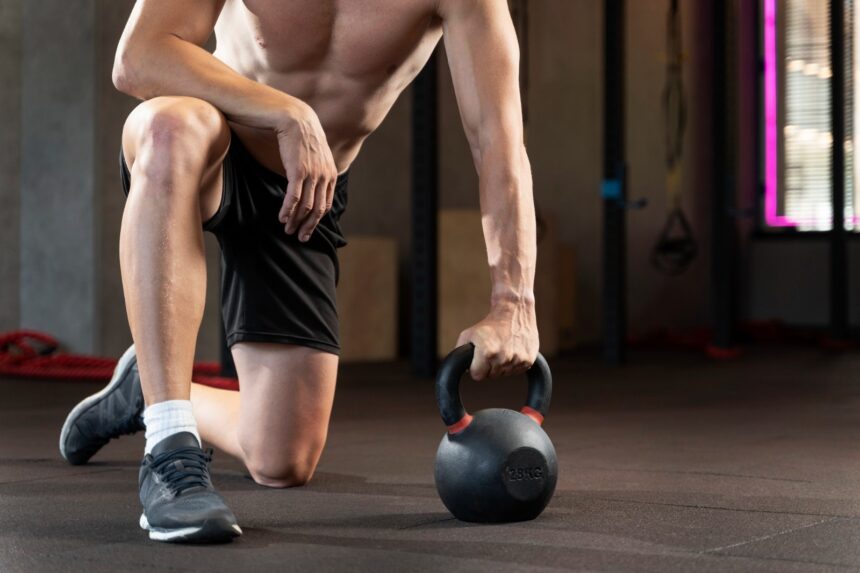
A kettlebell shoulder workout uses one or two kettlebells to train the muscles around the shoulder joint.
The offset weight forces your body to stay balanced and controlled.
How it works in real life
Kettlebells move freely instead of locking you into a fixed path.
This helps your shoulders learn how to stabilize during real movement.
Key terms explained simply
- Shoulder joint: The joint where your arm meets your body and can move in many directions.
- Stabilizer muscles: Small muscles that keep your shoulder steady while you move.
- Overhead position: When your arm is lifted above your head with control.
Quick Takeaway
- Kettlebells train strength and control together.
- The shoulder moves more naturally than with machines.
- Beginners can progress safely with lighter weights.
Why a Kettlebell Shoulder Workout Matters
Strong shoulders protect your body and improve performance.
- Joint health
Kettlebells allow your shoulders to move freely, reducing unnecessary joint stress. - Balanced strength
Training one arm at a time helps fix strength differences. - Athletic carryover
Shoulder stability supports punching, grappling, lifting, and daily tasks. - Long-term safety
Strong stabilizers lower the risk of shoulder injuries.
Quick Takeaway
- Healthy shoulders last longer.
- Balance matters more than heavy weight.
- Control always beats speed.
Kettlebell Shoulder Workout Exercises
Kettlebell Shoulder Press
What it helps with
Builds overhead strength while teaching shoulder stability.
This is the base movement for any kettlebell shoulder workout.
What you’ll feel working
Your shoulders and upper arms will work steadily.
Your core will engage to keep you upright.
How to do it
- Hold the kettlebell at shoulder height with your wrist straight.
- Keep your elbow close to your body.
- Stand tall with feet shoulder-width apart.
- Gently tighten your stomach for support.
- Press the kettlebell upward in a smooth line.
- Stop when your arm is straight overhead.
- Keep the kettlebell stacked over your shoulder.
- Lower slowly back to shoulder height.
Breathing
Breathe in before pressing and breathe out as the kettlebell moves up.
Common mistakes (with fixes)
- Leaning back: Tighten your core and reduce weight.
- Pressing forward: Keep the kettlebell over your shoulder.
- Rushing reps: Slow down each repetition.
- Hard elbow lock: Stop just before full lockout.
Make it easier
- Use a lighter kettlebell to learn control.
- Press halfway instead of full overhead.
- Perform seated to reduce balance demands.
Make it harder
- Pause for two seconds overhead.
- Increase repetitions before weight.
- Perform single-arm sets only.
Best for
Great for beginners and intermediate trainees.
Avoid if overhead lifting causes sharp pain.
Kettlebell Push Press
What it helps with
Develops power by using leg drive to assist the press.
It teaches the body to move as one unit.
What you’ll feel working
Shoulders work with support from the legs.
The core stabilizes the transfer of force.
How to do it
- Hold the kettlebell at shoulder height.
- Stand tall with feet grounded.
- Dip the knees slightly.
- Drive through the feet to stand quickly.
- Press the kettlebell overhead as you rise.
- Keep the kettlebell close to your body.
- Finish with control overhead.
- Lower slowly back to start.
Breathing
Breathe in during the dip and breathe out during the drive upward.
Common mistakes (with fixes)
- Too deep dip: Use a shallow knee bend.
- Pressing early: Let legs start the movement.
- Losing balance: Slow the movement down.
- Using heavy weight: Reduce load to regain control.
Make it easier
- Practice the leg drive alone first.
- Use a lighter kettlebell.
- Reduce range of motion.
Make it harder
- Increase weight gradually.
- Add pauses overhead.
- Alternate arms every rep.
Best for
Quick Takeaway
Ideal for athletes and martial artists.
Not recommended for beginners with knee pain.
- Press builds strength.
- Push press builds power.
- Technique comes first.
Kettlebell Lateral Raise
What it helps with
Targets the side shoulder muscles for balance.
Supports posture and shoulder control.
What you’ll feel working
A steady burn in the outer shoulders.
The movement should feel smooth.
How to do it
- Hold the kettlebell at your side.
- Stand tall with relaxed shoulders.
- Raise the kettlebell out to the side.
- Stop at shoulder height.
- Keep the arm mostly straight.
- Pause briefly at the top.
- Lower slowly back down.
Breathing
Breathe out while lifting and breathe in while lowering.
Common mistakes (with fixes)
- Swinging weight: Slow down and lighten load.
- Shrugging shoulders: Relax the neck.
- Lifting too high: Stop at shoulder level.
- Bent arm: Keep arm long and controlled.
Make it easier
- Use very light weight.
- Lift only halfway.
- Support body with free hand.
Make it harder
- Increase reps.
- Slow the tempo.
- Pause longer at the top.
Best for
Good for beginners focused on shoulder balance.
Stop if pain increases.
Kettlebell Halo
What it helps with
Improves shoulder mobility and control.
Prepares shoulders for pressing.
What you’ll feel working
Gentle activation around shoulders and upper back.
No strain should be felt.
How to do it
- Hold the kettlebell by the horns.
- Keep it close to your chest.
- Circle it slowly around your head.
- Keep elbows close.
- Stay upright.
- Move smoothly.
- Reverse direction.
Breathing
Breathe slowly and naturally throughout the movement.
Common mistakes (with fixes)
- Moving fast: Slow down for control.
- Wide elbows: Keep elbows tucked.
- Leaning torso: Stay upright.
- Heavy weight: Use light kettlebells only.
Make it easier
- Reduce circle size.
- Lower repetitions.
- Use lighter weight.
Make it harder
- Increase reps slowly.
- Add pauses.
- Combine with presses.
Best for
Excellent for warm-ups and recovery days.
Quick Takeaway
- Mobility supports strength.
- Light weight works best.
- Control protects joints.
Level Guide
Beginner
- Focus on form: Learn clean movement first.
- Avoid rushing: Slow reps build control.
- Progress safely: Add reps before weight.
Intermediate
- Focus on volume: Increase total work gradually.
- Avoid sloppy reps: Fatigue should not break form.
- Progress safely: Use pauses and tempo.
Advanced
- Focus on integration: Combine upper and lower body.
- Avoid ego lifting: Heavy weight without control risks injury.
- Progress safely: Cycle intensity and rest.
Done-for-You Workouts
Home Workout
- Shoulder Press: 3×8 (60s rest)
- Lateral Raise: 3×12 (45s rest)
- Halo: 2×10 each way
This routine builds strength with minimal equipment.
Train 2–3 times per week.
Gym Workout
- Push Press: 4×6 (90s rest)
- Shoulder Press: 3×8 (60s rest)
- Lateral Raise: 3×15 (45s rest)
This balances power and control.
Use twice weekly.
Martial Arts Workout
- Halo: 2×10
- Single-Arm Press: 3×6 per side
- Push Press: 3×5 per side
Supports punching and grappling strength.
Perform 1–2 times weekly.
Safety & Injury Prevention
- Sharp pain: Stop immediately if pain appears.
- Loss of control: Reduce weight or reps.
- Ongoing soreness: Rest or reduce frequency.
Seek professional help if pain lasts several days.
Common Mistakes & Misconceptions
- Heavier is better
Happens due to ego; fix it by reducing weight. - More exercises equal better results
Too much volume lowers quality; focus on basics. - Burn equals progress
Control matters more than sensation.
Mindset & Long-Term Progress
Train consistently, not aggressively.
Track reps and control instead of weight alone.
Strong shoulders are built over time.
Build Strong, Healthy Shoulders with Kettlebells
A kettlebell shoulder workout strengthens your shoulders, improves joint stability, and enhances real-world performance. By training with control, patience, and proper technique, you not only build strength but also reduce injury risk and support long-term shoulder health. Consistent practice and mindful progression make kettlebells a powerful tool for beginners and experienced trainees alike.
Next Steps:
- Pick one workout plan and follow it for four weeks – Focus on consistency rather than lifting heavier weight too quickly.
- Increase reps before weight – Prioritize form and control to prevent injury.
- Track progress – Monitor strength, stability, and comfort instead of relying solely on numbers.
- Focus on pain-free movement – Stop or adjust exercises if discomfort occurs.
This approach ensures your shoulders get stronger, healthier, and ready for any physical challenge while minimizing risk.
Frequently Asked Questions
1. Is a kettlebell shoulder workout safe for beginners?
Yes, it is safe when you start with light weight and controlled movement. Kettlebells allow natural shoulder motion, which is often easier on the joints than machines.
2. How heavy should my kettlebell be for shoulder training?
Beginners usually do well with a kettlebell that feels light but challenging by the last few reps. If form breaks or balance is lost, the weight is too heavy.
3. Can kettlebell shoulder workouts replace dumbbells?
For most people, yes. Kettlebells train both strength and stability, which dumbbells may not fully challenge.
4. How often should I train shoulders with kettlebells?
Two to three times per week works well for most beginners. This allows enough recovery while still building strength.
5. Do kettlebell shoulder workouts help posture?
Yes, when done correctly. They strengthen stabilizer muscles that help keep the shoulders aligned and upright.
5. What if I feel shoulder discomfort during exercises?
Stop the movement immediately and reduce weight or range of motion. Persistent pain should be checked by a qualified professional.
6. Is a kettlebell shoulder workout safe for beginners?
Yes, it is safe when you start with light weight and controlled movement. Kettlebells allow natural shoulder motion, which is often easier on the joints than machines.
7. How heavy should my kettlebell be for shoulder training?
Beginners usually do well with a kettlebell that feels light but challenging by the last few reps. If form breaks or balance is lost, the weight is too heavy.
8. Can kettlebell shoulder workouts replace dumbbells?
For most people, yes. Kettlebells train both strength and stability, which dumbbells may not fully challenge.
9. How often should I train shoulders with kettlebells?
Two to three times per week works well for most beginners. This allows enough recovery while still building strength.
10. Do kettlebell shoulder workouts help posture?
Yes, when done correctly. They strengthen stabilizer muscles that help keep the shoulders aligned and upright.
11. What if I feel shoulder discomfort during exercises?
Stop the movement immediately and reduce weight or range of motion. Persistent pain should be checked by a qualified professional.
12. Are kettlebell halos enough for shoulder mobility?
Halos are excellent for basic mobility and warm-ups. They work best when combined with controlled pressing movements.